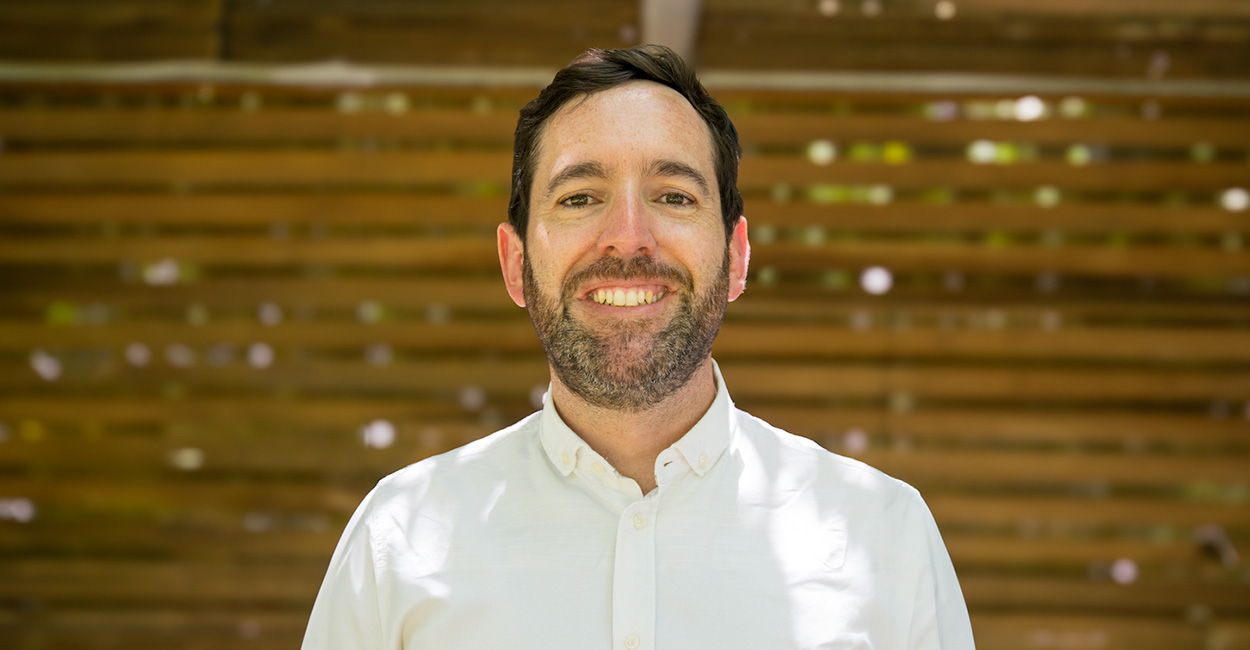
MAIN IMAGE: Sean Godoy – property innovation and strategy advisor
Senior writer
AI isn’t just assisting agents anymore; it’s starting to imitate them. The debate has moved beyond whether AI will replace people. The real question is: what happens when AI begins to plan, negotiate and communicate in ways that closely resemble human behaviour?
Most agents believe that human interaction will always be essential. But as AI learns to mimic empathy and respond with near-human intuition, the challenge shifts. If AI starts sounding like us, what will set real agents apart?
Teaching AI what humans care about
Sean Godoy, property innovation and strategy advisor, says it may take time for AI to truly imitate natural human interaction and warns that the ‘uncanny valley’ remains a barrier. “This concept is connected to the ‘almost-human’ characteristic of many AI outputs. These can include voice, images, and chatbots, amongst others.
“When one of these outputs is very nearly human, but there is something just off, such as the rhythm of AI speech or the positioning of the subject’s eyes in a portrait, it can invoke negative feelings such as unease or revulsion. This could lead to users or customers looking to interact with the real deal.”
AI is learning from immense amounts of data. Its computational power has doubled every six months since 2010, according to Our World in Data, far faster than the growth seen before then. But AI still cannot distinguish truth from false information the way a conscious human can. For this reason, developers must rigorously remove harmful content and programme ethical principles into AI systems. Only then could AI become a force for good.
Erik Brynjolfsson, director of the MIT Initiative on the Digital Economy, believes it’s possible: “….the right question is not ‘What will happen?’ but ‘What will we choose to do?’ We need to work aggressively to make sure technology matches our values.”
Can AI play by real estate’s rules?
The values a professional and physical real estate agent embraces include honesty, integrity, client advocacy, and competence. Godoy rates whether we can trust AI to deliver these same values:
A: Can we trust AI to be honest?
“It really depends on the context. AI may not be programmed to lie, but it relies on a mountain of data and information from a myriad of sources that itself may not be accurate or complete. This can lead to inaccuracies in AI output, depending on the specific tool in question.”
B: Is AI integrious?
“AI does not naturally possess integrity, although in many cases it may demonstrate integrity. By its nature, it would not intentionally mislead a user, though this depends heavily on how it is programmed. Like many things, you need to trust the manufacturer of the product itself.
“That said, artificial integrity is an emerging area of AI that involves AI designed in a way that it reflects human-centred values and robust ethical principles.”
C: Can AI advocate effectively for a client?
“It depends on the context, but overall, my view is no. There are many intricacies involved in determining a client’s circumstances, needs, and constraints to advocate effectively. Often, a form would not accurately capture these, and human interaction is needed. Furthermore, the interactions needed to advocate require a human touch.”
D: Is AI competent to deliver a complete package of real estate services, from securing a property listing right through to moving-in day?
“AI is definitely able to offer a wide range of tools and services that can be useful to both the agent and their client. Any tasks involving research, scheduling, organisation, and workflow management, amongst others, can often be carried out by AI or at least assisted by it.
“There will be limitations, though, such as the actual AI products available and which are accessible.”
Losing 80% of estate agents
In a similar vein, Bobby Bryant of Bobby Bryant Properties in the US posted a provocative article: “Let’s be honest: AI agents are going to replace 80% of real estate agents.” Note, he says, that he did not say ALL agents … He’s referring only to those who are inexperienced, untrained, unproductive, and unprofessional, all of which are underpinned by the low barrier of entry into the profession and those treating the role as a ‘side hustle rather than a serious career.’
Godoy agrees; however, he says, in SA this percentage is likely to be lower. “My general feeling is that in an emerging country, many buyers and sellers will still want to deal with a human in this area of the property industry, meaning that more opportunity exists for our agents. In addition, our current pool of estate agents is likely to be hesitant when it comes to adopting new technology in the short to medium term.
“That said, the core theme here is that agents who embrace AI to improve their service and skills will likely outrun those who do not (as Bryant described). I have heard many people say that the sub-par agents are the ones that will struggle to compete with ‘AI-powered agents.’ This requires a decent level of adoption by agents, though, which may take some time.”
Bryant supports his claim with evidence of what AI agents are currently capable of, including a large percentage of the key functions that a human agent performs, “only better, faster, and without bias or burnout.”
“This is very true,” says Godoy. “Much of the back-office tasks performed by agents can be performed by AI tools better and faster. It is widely accepted that there will always be a place for estate agents given the need for a human touch in many areas of the home buying and selling process, such as emotional intelligence, negotiation skills, local expertise, and relationship building.”
Bryant’s summation is that the best agents will use AI to scale and focus on where they add unique human value. It’s a tighter, tougher market with the need for real professionals. Those who bring deep expertise, creative solutions, and true value is increasing. For those who merely unlock doors or offer outdated comps, the writing is on the wall. AI is not coming for their job—it’s coming to do it better.”