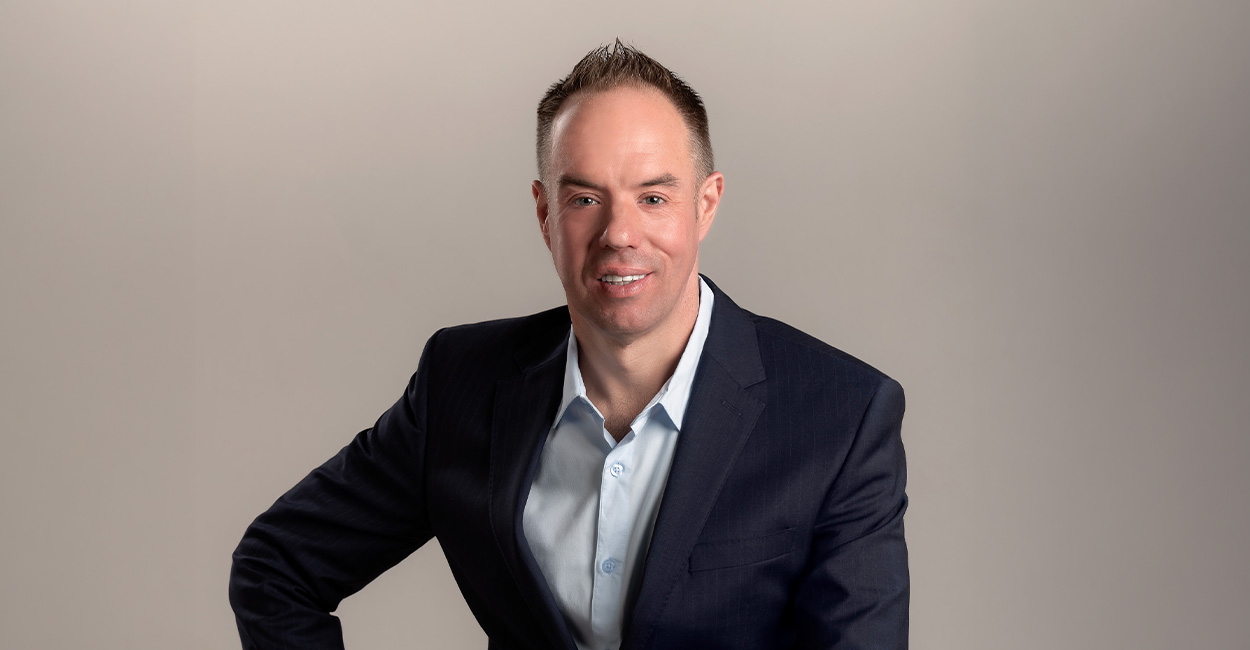
MAIN IMAGE: Bradd Bendall – BetterBond national head of sales
BetterBond
With the prime lending rate at 10.25% – its lowest in 14 months – and the rand at a three-year high, bolstered by record gold prices, South Africa is enjoying renewed economic confidence. “Property prices have been rising – with a new record average purchase price of R1.63 million reached at the end of 2025 – but this hasn’t diminished the country’s appeal as a luxury investment destination. Even at R16.40/$ (as of 9 January 2026), international buyers are still getting excellent value for money when they invest in South African property,” says Bradd Bendall, BetterBond’s national head of sales.
The South African currency strengthened by 14% against the US dollar in 2025, and many are keen to secure a foothold in the market before it strengthens further. Homes in Cape Town and KwaZulu-Natal’s North Coast remain at least 50% cheaper than comparable properties on the French Riviera or the Mediterranean, according to the latest Knight Frank Wealth Report. “While South Africa’s luxury prices are hitting record highs locally, they still offer comparable value by international standards,” says Bendall.
Global comparisons
The appeal of South African luxury property becomes even clearer when compared internationally. According to Knight Frank’s Prime International Residential Index (PIRI 100), in Monaco, $1 million (around R16.5 million) will buy you a 16-square-metre studio – roughly the size of a parking bay. Your money stretches further in Dubai, where $1 million buys a modern 95-square-metre two-bedroom apartment. In London, home to many South African expats, the same amount secures only a small one-bedroom flat. By contrast, along the Atlantic Seaboard in Cape Town or in Umhlanga, KwaZulu-Natal, the same amount could buy a sprawling 200-square-metre villa or penthouse.
The ‘Nettleton effect’
High-profile sales in affluent suburbs further illustrate confidence and value in South Africa’s luxury market. Last year, Number 5 Nettleton Road in Clifton sold for R157 million. Although the buyer in this transaction was South African, foreign buyers account for over 40% of all sales above R10 million and 25% of transactions in the R5 million to R10 million price band, says Bendall.
Cape Town and Johannesburg have also been named in the Africa Wealth Report 2025 as two of the wealthiest cities on the continent. With 40% of all transactions over R10 million concluded in the Western Cape, it is unsurprising that five of the suburbs with the most expensive properties are in Cape Town. In areas such as Camps Bay, Clifton, Constantia, Bantry Bay and the Waterfront, properties sell for upwards of R20 million.
“Although Dubai and Miami are among a new wave of wealth hotspots attracting high-net-worth buyers, Cape Town’s geographical constraints create a ‘forced scarcity’ of development opportunities. This means that demand will always outweigh supply,” says Bendall. “The relentless demand for luxury living in these coastal suburbs means that an investment offers considerable returns, even during economic downturns.”
South Africa’s luxury property market has shown robust growth. BetterBond’s September Property Brief notes that home loans of upwards R3 million increased by 6.6% year-on-year and now account for 10% of all bond approvals.
Tourism boost
With international arrivals up 20% in 2025, the short-term rental market in Cape Town is booming. A well-located apartment on the Atlantic Seaboard can achieve gross rental yields of 7% to 9%, significantly outperforming the 3% to 4% yields typical in London or New York, as reported in the Knight Frank World Cities Index (2025).
Resilience value
Beyond financial value, South Africa’s abundant natural beauty and quality lifestyle continue to attract international buyers. Increasingly, wealthy investors are also looking for resilience and sustainability. “These buyers don’t just want homes with views; they want sustainability and long-term insurability,” explains Bendall. “Properties with solar systems, battery backup and boreholes fetch premiums of 15% to 20%.”
Homes built with climate-adaptive materials are more likely to withstand environmental challenges such as fires, floods and heatwaves. “Climate change has become a financial risk for many countries in Europe. In Greece, for example, insurers are increasingly reluctant to renew policies for homes built with traditional methods because of the risk,” says Bendall.
Tax incentives
Foreign buyers can make the most of their purchasing power without having to pay any stamp duties or levies, explains Bendall. Transfer duty is payable to the South African Revenue Service (SARS), but foreign buyers pay the same tax regardless of a sliding scale on properties of more than R1.21 million. A buy-to-let investment, for use as an Airbnb property for example, will incur income tax on any profit generated within the country. “However, as with local buyers, foreign owners can deduct property-related expenses from the gross rental income before this tax is calculated.” Foreign buyers will also be liable for Capital Gains Tax when they sell their properties. Fortunately, South Africa has robust Double Taxation Agreements with the UK, USA, Germany and over 70 other nations to ensure that foreign buyers are not taxed twice on the same income.
For now, the purchasing power of foreign currency in South Africa remains significant, allowing buyers to invest in property that combines lifestyle, security and luxury at a fraction of the cost of Europe or the United States, concludes Bendall.