
Advertorial
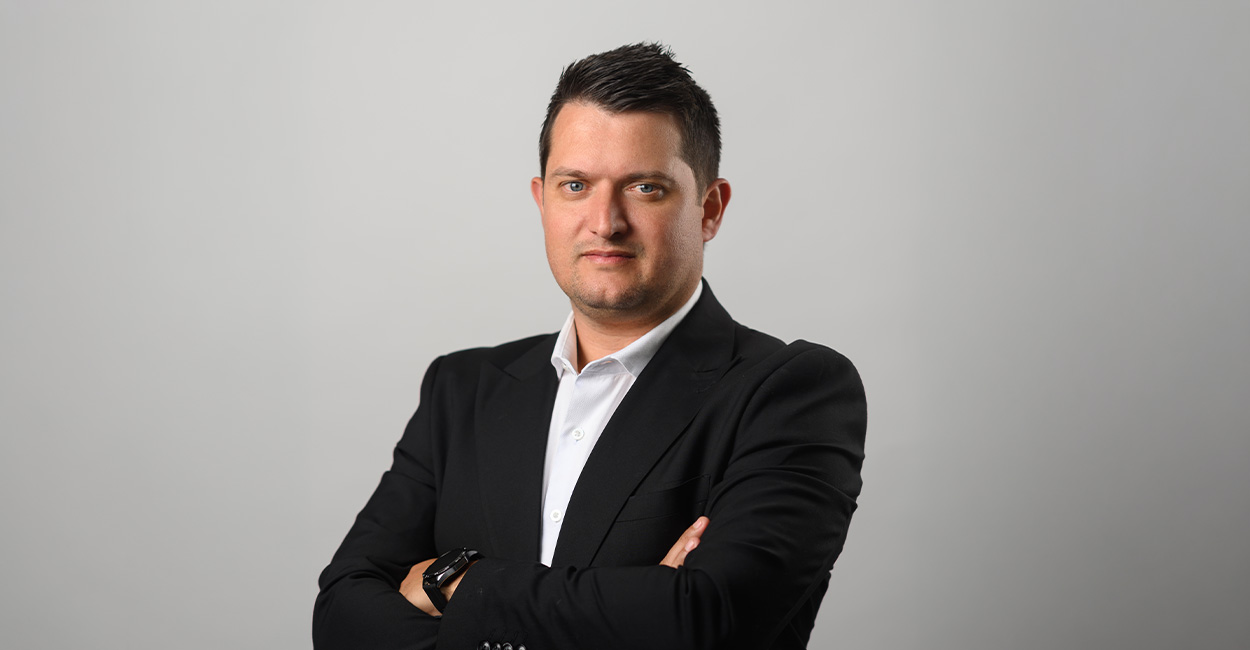
For Musa Kalenga, group chief executive of Brave Group and Technologist, the conversation around AI is being framed incorrectly. He says the real story is not about robots replacing people, or machines taking over industries: “It is about something far more practical and potentially far more powerful. It’s an amazing opportunity, and not just as an innovation, but as a renaissance.”
Kalenga’s message frames the thinking behind Private Property’s stance on AI: AI does not replace the human experience but rather amplifies and streamlines it. While AI fundamentally changes and reshapes how property businesses operate and serve clients, this is not the first time that humans have had to adapt to a renaissance in development.
Kalenga provides examples: “In 1786, the idea of travelling across a city in a motor vehicle would have appeared magical. A century ago, summoning a stranger via an app to drive you across town would have sounded absurd. That same sense of disbelief now surrounds AI and represents a similar inflection point.
“While nobody fully understands where this latest technological shift will lead, we do know that every industry is already being disrupted. So, instead of companies panicking, we need to rethink how we work, serve clients, and apply human creativity. AI should not make people less relevant. It should make them more effective,” he says.
For many people, their first interaction with AI felt almost surreal: systems capable of reasoning, conversing, and producing content in real time? “The wonderful news is that we are at the beginning,” said Kalenga. “The terrible news is that we are at the beginning.”
Human reaction
While the opportunities that AI delivers are enormous, so too is the uncertainty. For example, Kalenga points out that traditionally, humans’ first reaction to anything new or extraordinary is to respond in one of three ways: fight it, run from it, or freeze in confusion.
“Yet there is a fourth option, which is to forge ahead.” He references how, beyond what property professionals can do within their own realm of influence, there are multiple forces shaping outcomes. “Climate risk, decarbonisation, regulation, changing work patterns and evolving consumer behaviour are all changing how people buy, sell, rent, and invest in property.
“At the same time, data, platform-based services (like Private Property), and AI are changing how organisations (and individuals) think about investment cycles, returns, and operational efficiency. When adding all these factors together many feel the pace of change is overwhelming, like a whirlwind.”
The gift of time
Yet, amid the whirlwind, AI tends to add to enormous value in real estate – the saving of time. “It is a chance to free people from repetitive work. However, businesses should not use technology simply to do more of the wrong things faster,” emphasises Kalenga. “Organisations should use AI to reduce cognitive overload; improve collaboration; unlock creativity; enhance collective intelligence; and create more meaningful human interaction.”
Kalenga presents three operational areas where AI can create measurable value in the property sector:
- Front office – the customer-facing functions: managing enquiries; booking viewings; handling listings; generating leads; improving recommendations; and reducing customer friction.
“Consumers face constant digital distractions every day, meaning businesses must work harder to capture and hold attention. AI can improve targeting, communication and personalisation.” - Middle office – operational processes: reading leases; structuring documents; portfolio analytics; risk scoring; and financial analysis.
“Tasks that once required significant manual effort can increasingly be automated or accelerated through AI systems.” - Back office – administrative systems: prioritise tasks; organise data; route requests; automate repetitive work; and improve responsiveness.
“Instead of functioning purely as support departments, back-office operations can become strategic business enablers.”
The change-maker tools
Kalenga proposes that a modern AI business can be broken down into four broad ‘tool’ categories. reasoning, workflow, search and knowledge, and specialised tools.
- Reasoning tools
These include platforms such as ChatGPT, Claude, Gemini and Grok. Kalenga describes them as systems capable of mimicking human reasoning and conversation in real time. “What once took hours can now happen in minutes,” he explained. “These tools are already improving research, writing, communication and analysis.” - Workflow tools
These involve AI systems that are integrated directly into business operations, automating repetitive tasks, improving workflows, and thus increasing efficiency. “Businesses gain the most value when employees deeply understand the platforms they use.” - Search and knowledge tools
AI-enhanced search systems can organise vast amounts of company information into usable knowledge. “Instead of manually searching through emails, documents or databases, property professionals can retrieve relevant information instantly, provided businesses integrate AI into secure organisational environments.” - Specialised tools
Industry-specific platforms are now being built for narrow use cases such as: leasing; property management, analytics; documentation; portfolio management; resident engagement, and maintenance management. “These tools are designed to solve highly specific operational problems.”
Humans still matter most
One of the strongest messages that Kalenga emphasises is that AI should augment human capability, and not eliminate it. Despite his enthusiasm for AI, he stresses that people remain central to the future of work through three concepts:
- Human-on-the-loop.
- Human-in-the-loop.
- Human-with-the-loop.
The latter, says Kalenga, represents true collaboration between humans and AI systems. ”AI works best when it amplifies human decision-making rather than replacing it.”
Even relationships benefit
Kalenga sheepishly admits that he has used AI during disagreements with his wife. Instead of sending emotionally charged messages, he has asked ‘Claude’ to help him respond in a more supportive and constructive way. “The result,” he jokes, “dramatically improves the outcome.”
Behind his humour is an important point: communication matters, and AI can help people communicate with greater clarity, empathy and emotional intelligence.
AI’s real value is human value
“The greatest opportunity presented by AI is not efficiency alone; it is the chance to free people from repetitive work so they can focus on creativity, problem-solving and human connection,” says Kalenga.
“Those willing to rethink how they work, and brave enough to experiment, may ultimately gain far more than operational efficiency: they may gain the ability to become more human in the process.”