Advertorial
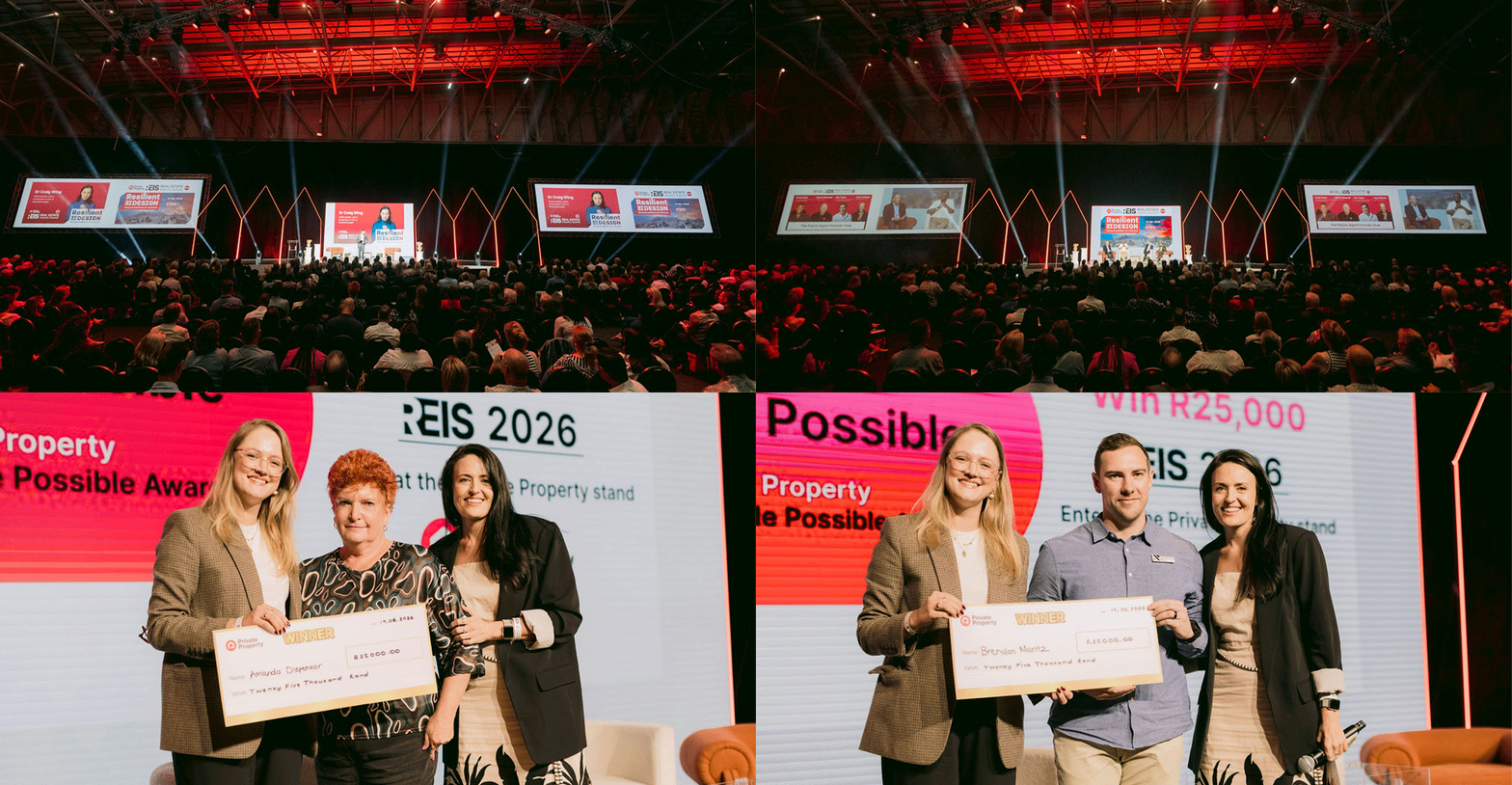
REIS 2026, themed Resilient by Design and hosted by Private Property and Absa Home Loans, exceeded all expectations when it brought together more than 1000 real estate stakeholders in Cape Town on 19 March.
This high turnout proves yet again (as it did in Johannesburg last year) that REIS has an undisputed and premier reputation in Africa for delivering the energy, networking, collaborations, and knowledge needed in a market impacted by global events that force a shift in traditional real estate relationships, advance industry standards, and introduce a stronger focus on professional growth.
The expert speakers were hyper-focused on equipping the industry with forward-looking strategies to navigate volatility, disruption, and structural change. The consistent message was clear: success in today’s market requires scenario-based thinking, adaptive business models, and a deliberate shift toward customer-centric value creation. From macroeconomic pressures to AI transformation, the emphasis was on building resilient, future-fit organisations that can anticipate change rather than react to it.
Miyelani Maluleke, Senior Economist, Absa
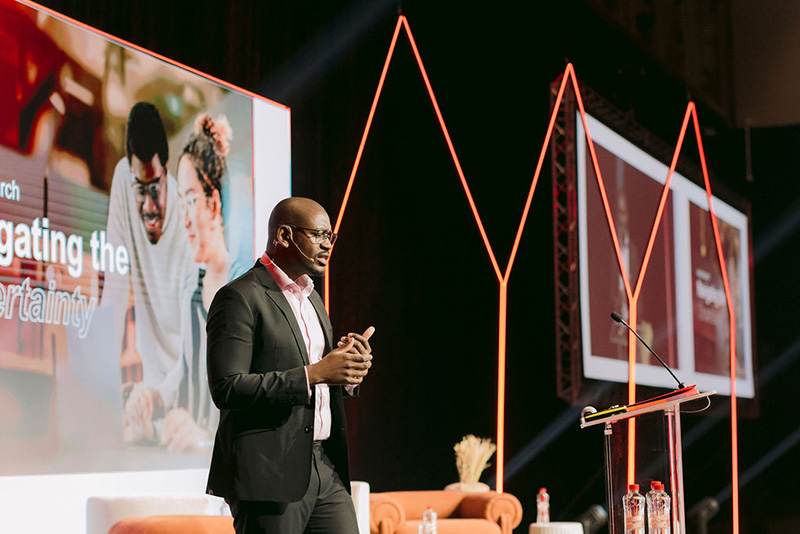
Geopolitical tension was the backdrop for Maluleke, who says businesses must plan for persistent volatility rather than temporary disruption. The primary risks will be fuel price increases, which will affect households across the board, impacting property affordability, credit demand, and investment decisions.
His advice is one of cautious optimism, where decision-making should be scenario-based rather than forecast-dependent in the short term.
Strategic message from Maluleke: Organisations that will outperform are those that stress-test against energy and cost shocks, build operational flexibility, leverage data and scenario planning, and align to long-term structural shifts, not short-term cycles.
John Loos, independent economist
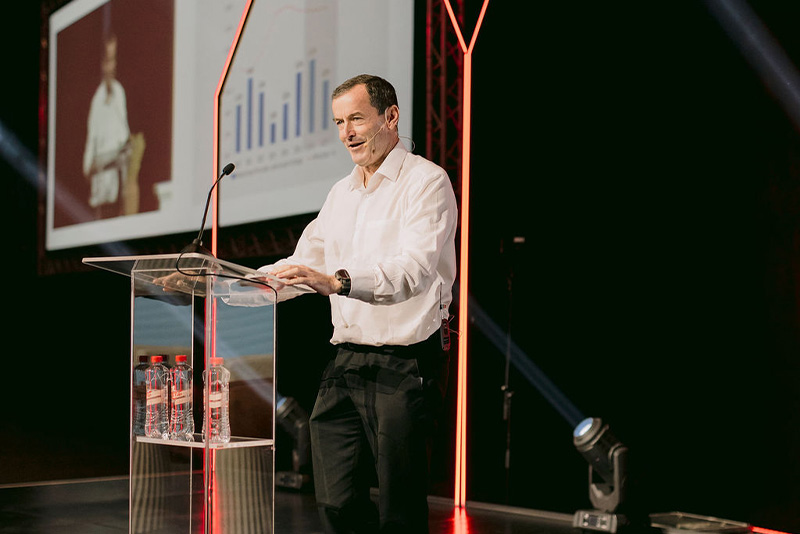
From setting the scene of a volatile global environment, described as a super cycle of uncertainty, Loos predicted the pause in rate cuts and expects a holding pattern for the rest of the year. As a result, property market growth will be gradual.
Loos touched on politics, affordability, job-creation concepts, and semigration, as well as the dependence of sustainable property growth on economic reform. This will depend on better urban planning and reduced spatial inequality, among other factors.
Strategic message from Loos: The South African property market is stable but constrained in the short term, but structurally dependent on macro reform in the long term. Stakeholders who understand that macro risk is positioned for regional growth nodes and aligned with long-term reform trends will be best placed to capture the next meaningful upswing in property value.
Nigel Mangwanda, Group Chief Engineer and Architect, Absa
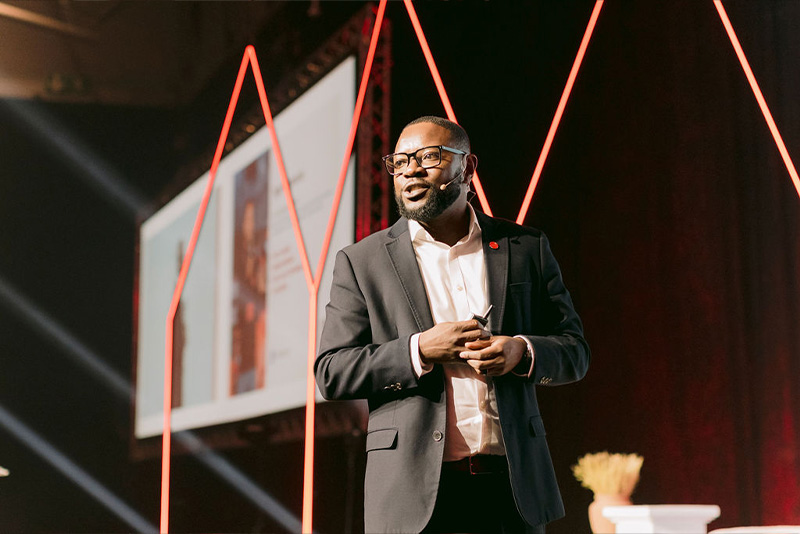
“Future resilience is not built by working harder, but by thinking differently,” said Mangwanda, who provoked the audience to consider three unique practical applications in the context of remaining resilient by design, especially in times of disruption: inversion, meaning to solve problems from the opposite direction; subtract & amplify, a customer-centric redesign; and applied design thinking, highlighting the need for a problem-first discipline.
From breaking traditional thinking barriers to adopting AI with a human differentiator, Mangwanda made it clear that customer experience is the new competitive battleground for ensuring lifetime customer value.
Strategic message from Mangwanda: The most important strategic reflection for agents is in the answer to the question: “Where are we most vulnerable to disruption – and what would it take to disrupt ourselves?” This requires redefining the industry by bringing in people who will challenge assumptions, leverage AI meaningfully, reimagine customer value, and adopt non-linear thinking frameworks.
The Future Agent Fireside Chat between Shawn Mackrell, real estate coach; Kura Chihota, a local real estate consultant; and Ben Taylor, an international real estate advisor and Co-Founder of Fortuna and Co.
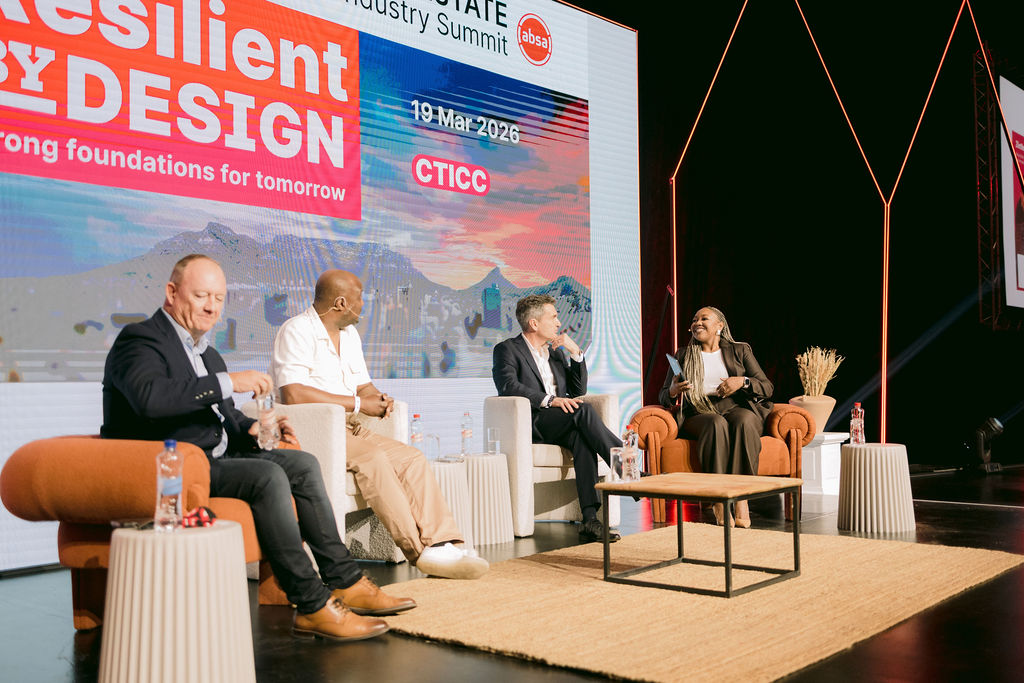
This session built on Mangwanda’s disruption theme, offering guidance on how to translate macro thinking into performance in a volatile and evolving market. They debated building a personal brand, the differentiators that allow agents to pivot while remaining anchored in their purpose, and how to move beyond mere transactions to relationships that build pipelines for the future.
Audience participation included messages from executives who highlighted the need for agents to consistently ‘show up’ and become builders of an adaptable, sustainable future.
Strategic message from Mackrell, Chihota, and Taylor: Real estate success is no longer about access to listings – it’s about building trust at scale, delivered consistently, and amplified through systems and technology. The panel reframed real estate as a purpose-driven profession in a relationship economy that prioritises empathy and small, consistent actions, ultimately resulting in scalable businesses.
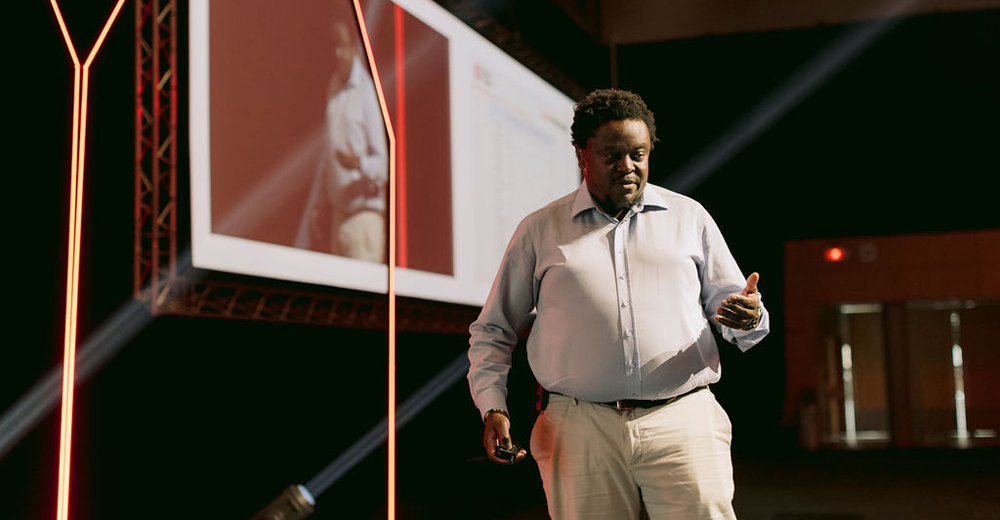
Musa Kalenga, Group Chief Executive of the Brave Group and a Technologist
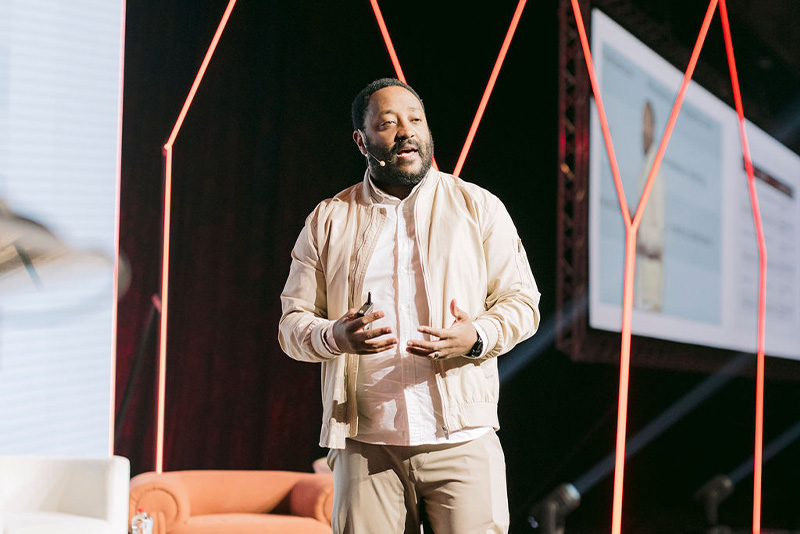
AI and emerging technologies are “indistinguishable from magic” in their impact, explained Musa Kalenga, creating massive opportunities that will reshape the industry. He presented a strategy of four capability tools that an AI-enabled enterprise requires for a competitive advantage.
A lightbulb moment was Kalenga’s description of a human-AI interaction: human-ON-the-loop, which is oversight of largely automated systems; human-IN-the-loop, where AI handles tasks validated by humans and controls outcomes; and human-WITH-the-loop (optimal state) when collaborative intelligence between AI and human thinking is integrated.
Strategic message from Kalenga: AI is not just a tool—it is a fundamental reset of how work is done. Those who move beyond fear, integrate intelligently, and use their time to deepen human value will become the architects of AI’s future.
Theo Mseka, CEO & Managing Director, AVIV Germany GmbH
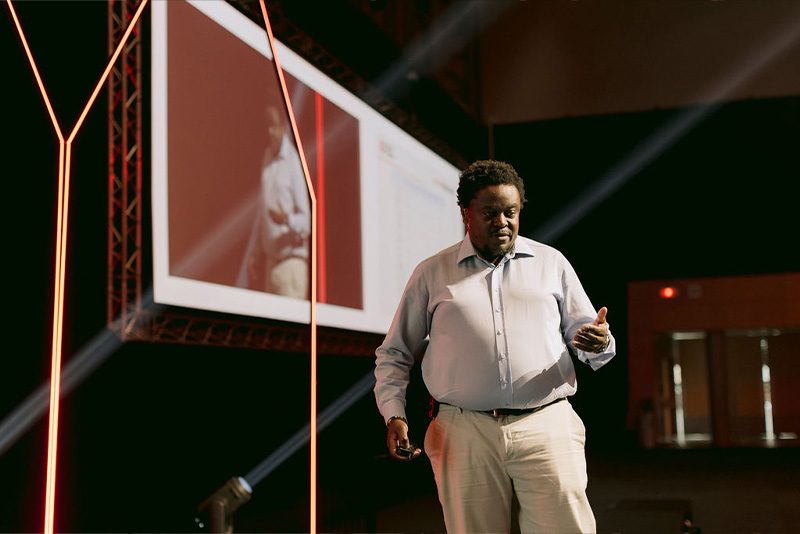
Is the grass greener? asked Mseka, who recently moved from SA’s shores, where he led Private Property as CEO for more than three years, to Germany.
Mseka’s opening remarks pulled the audience to consider that in comparison to most global cities, South African towns continue to offer significant value for money. This bodes well for the country’s foreign investment flows with international buyers acting as growth levers, alongside a vibrant local market.
His views on AI, combined with the human connection, made it clear that the future of the SA estate agent lies in shifting from a transactional agent to a trusted advisor. The agents who embrace technology, deepen their human connections, and build resilient systems will not only be relevant but will also outperform in a transforming global market.
Strategic message from Mseka: South Africa is not lagging behind global markets; rather, it is undervalued, dynamic, and globally competitive.
Takeaway
REIS 2026 delivered the message that building resilience into business models requires embedding data-driven decision-making, leveraging AI as a force multiplier, and deepening human connections as a differentiator. The next growth cycle for the industry favours those who think non-linearly, can translate the insights provided by the speakers into action, and can position their businesses to survive disruption and lead through it.