

BetterBond
South Africa’s residential property market is holding steady despite renewed affordability pressure, according to BetterBond’s October 2026 Property Brief. Home loan activity recovered in the third quarter, house prices continued to grow faster than inflation and approval ratios improved in most regions. However, the brief notes that higher deposit requirements and the September increase in the prime lending rate are making it harder for some buyers to enter the market.
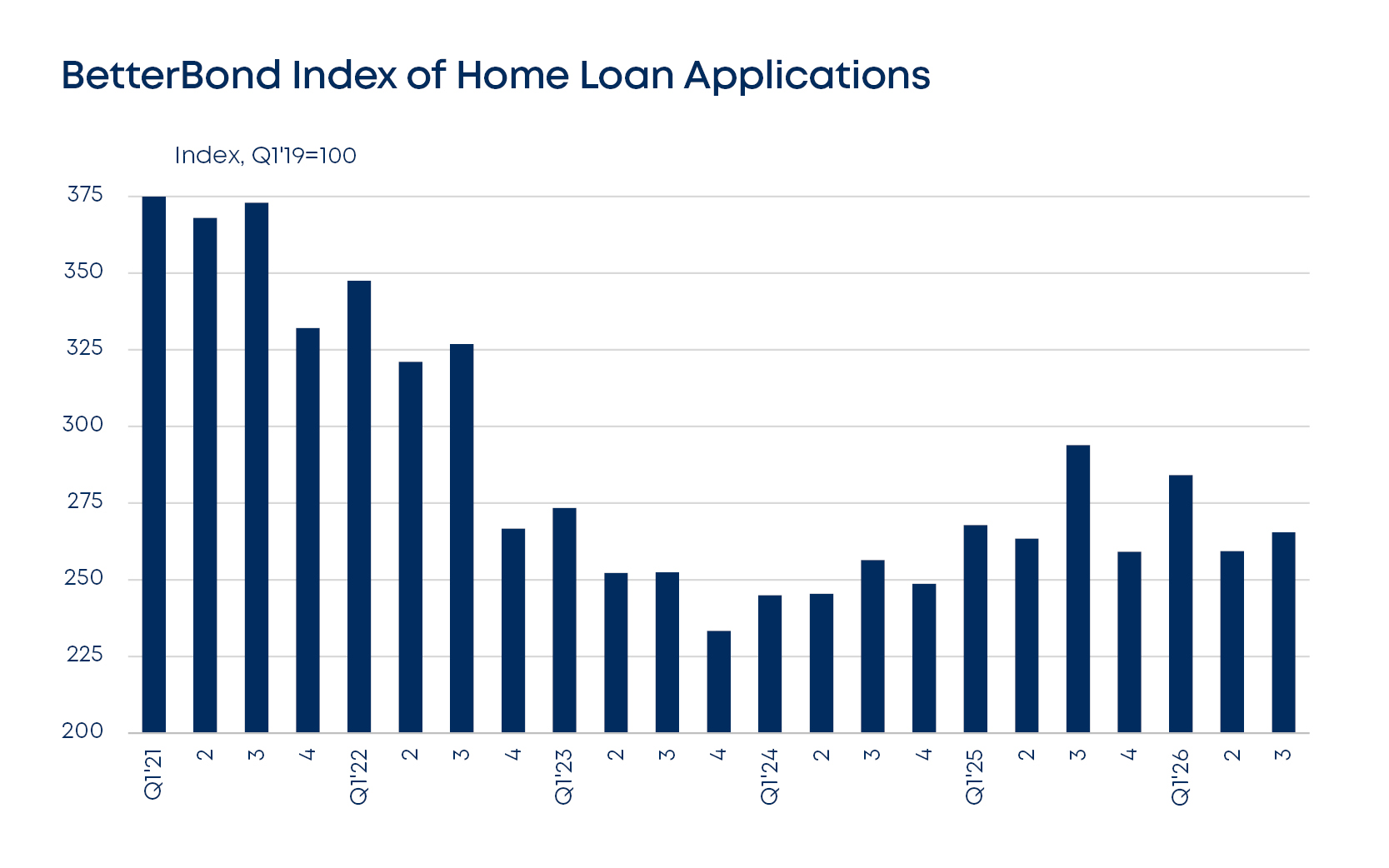
The BetterBond Index of Home Loan Applications rose by 2.4% quarter-on-quarter in Q3, recovering some of the ground lost in Q2 after the Reserve Bank’s Monetary Policy Committee began reversing the rate-cutting cycle in May. According to the brief, the average monthly number of applications over the first three quarters of 2026 is virtually on par with 2025.
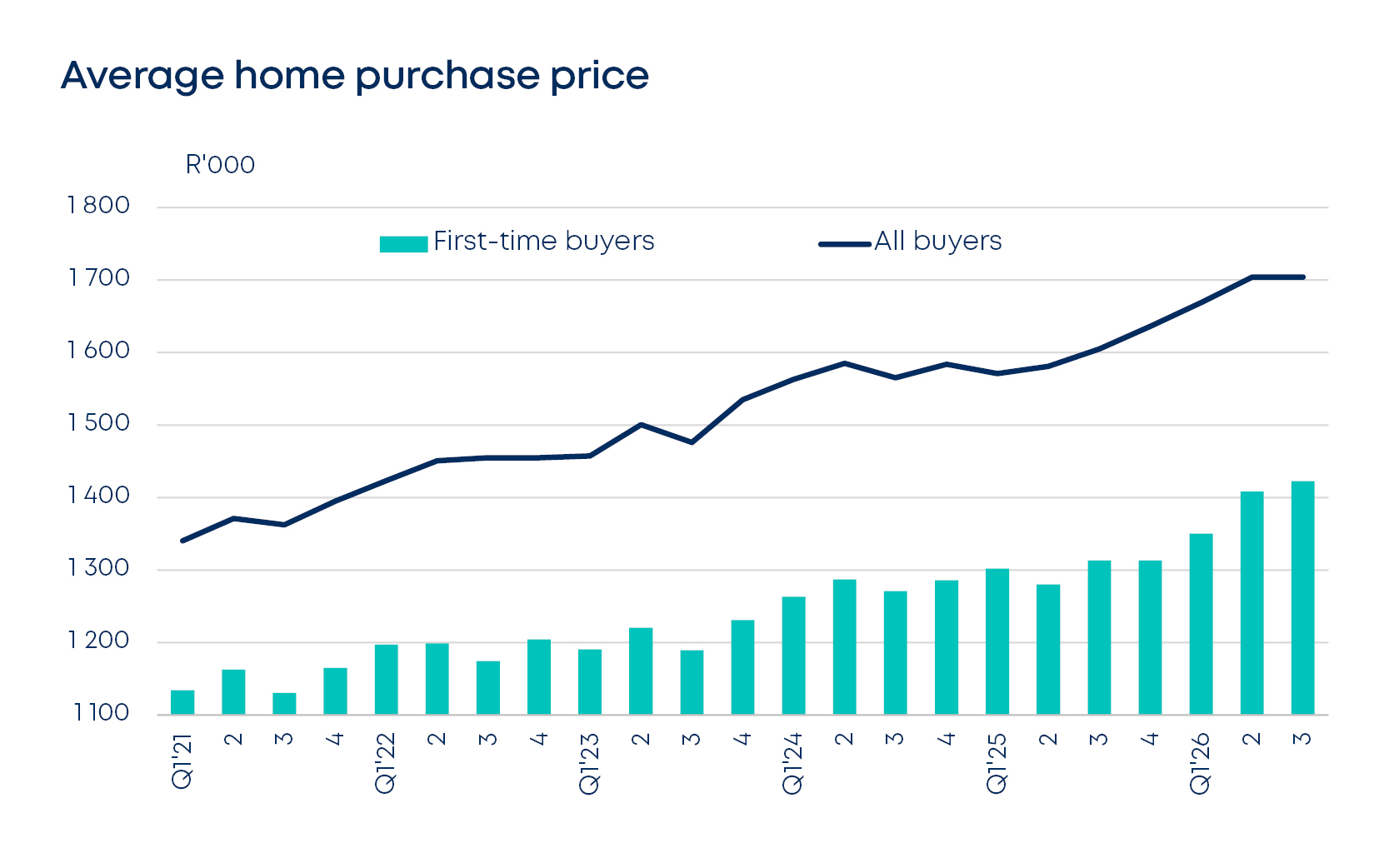
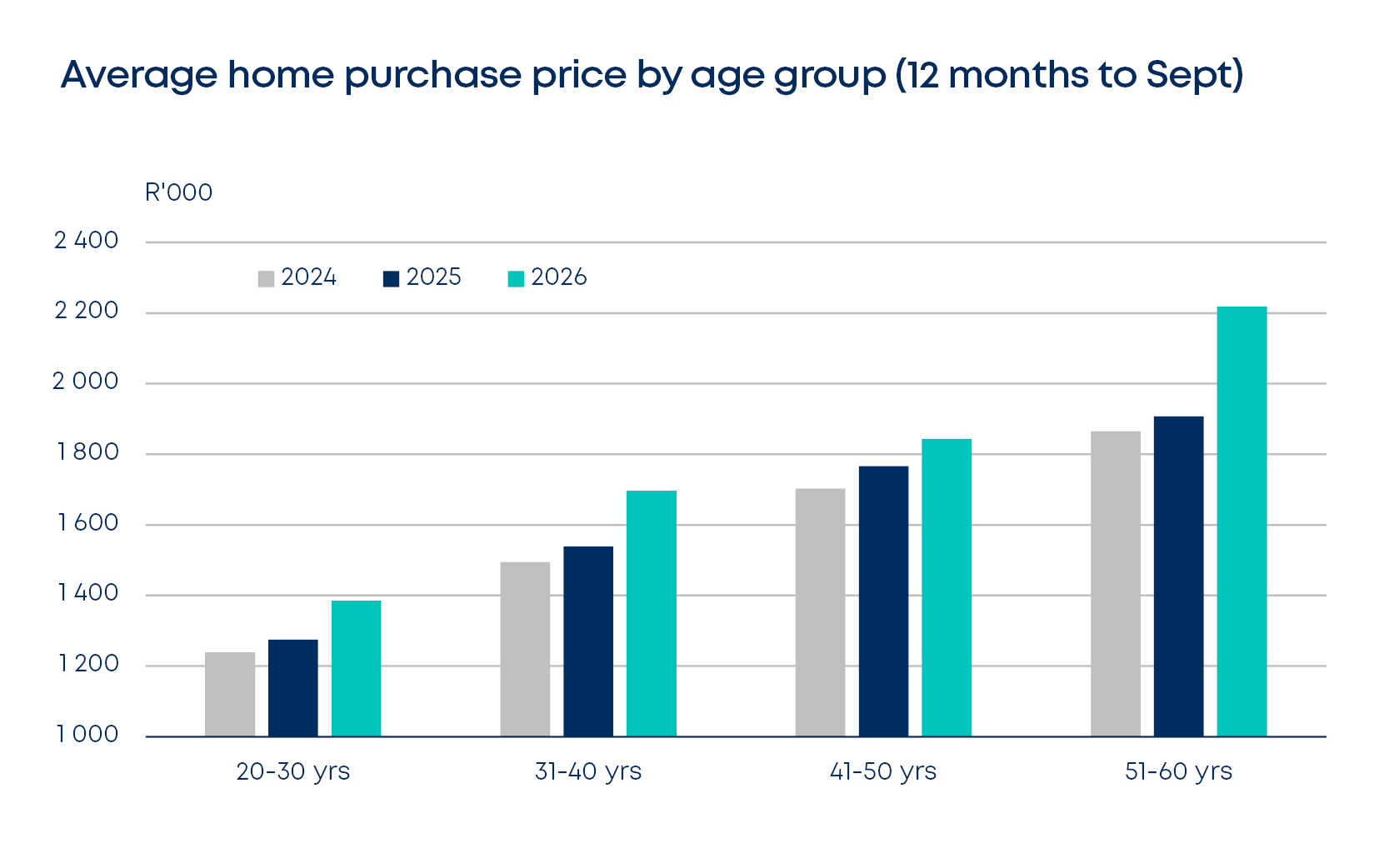
House prices are still moving upwards. The average price for all buyers reached R1.7 million in Q3, up 1.8% year-on-year, while first-time buyers (FTBs) recorded 8.4% year-on-year growth. The brief points out that average house price growth now exceeds inflation, which stood at 4.4%, by a healthy margin. Buyers aged 51 to 60 recorded the strongest gains, with an average purchase price of R2.2 million over the 12 months to September and real growth of 11.4%. Buyers aged 31 to 40 also saw double-digit nominal price growth.
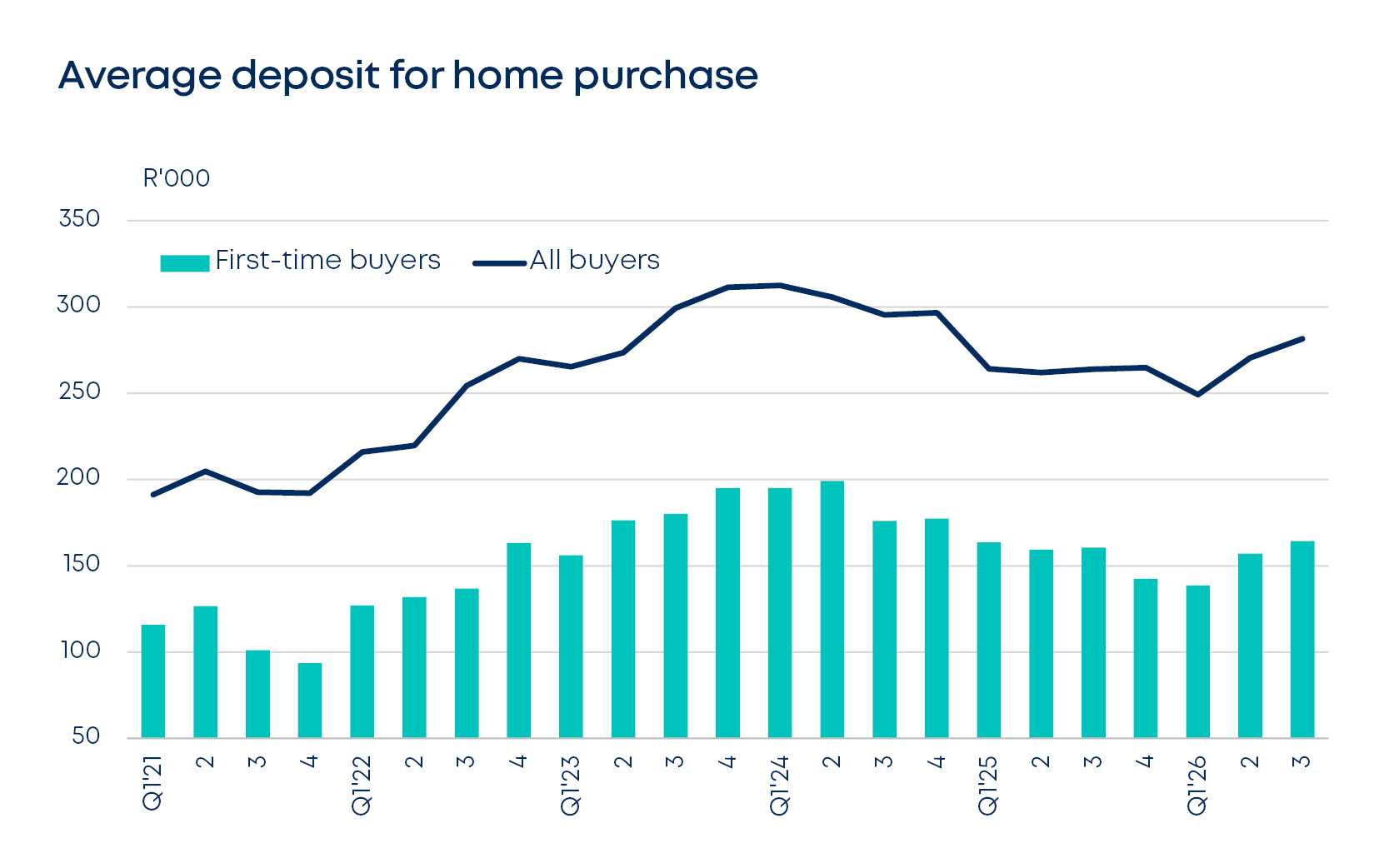
Deposits are the pressure point agents will need to watch. The brief describes lenders as uncertain about interest rate direction over the past year, with banks lowering deposit requirements seven times and raising them five times since September 2025. When the prime rate rose from 10.5% to 10.75% in September, banks reacted quickly, and Q3 ended with the average deposit requirement for all buyers 21.7% higher than a year earlier. FTBs fared better, with their average deposit up 5.6% year-on-year.
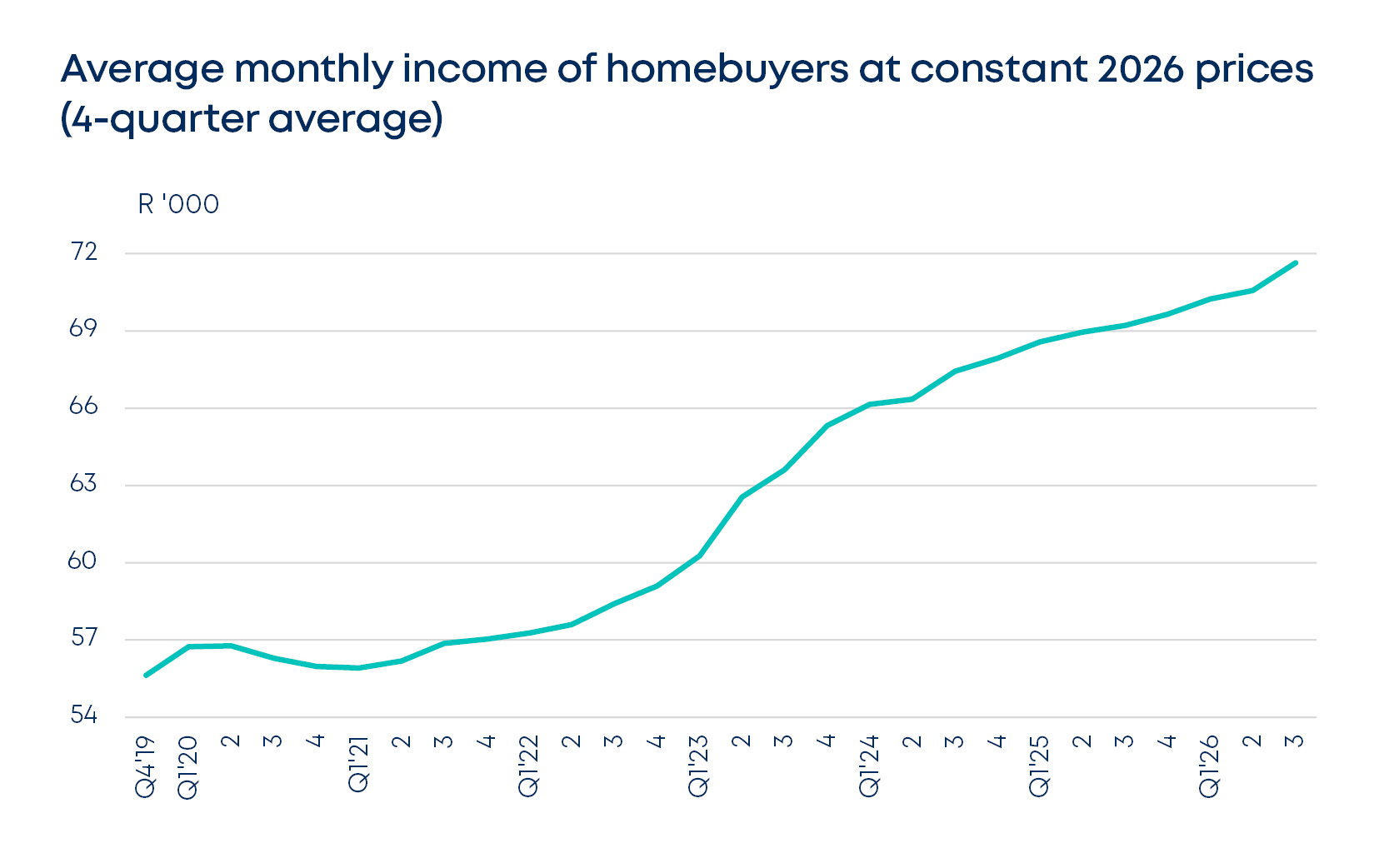
Rising incomes are helping to absorb some of that pressure. BetterBond recorded a new average homebuyer income of R74,000 a month in Q3. Over the past five years, homebuyer incomes have grown by an average of 4.7% a year in real terms, compared with 1.2% for GDP, and FTB incomes rose by 13.4% year-on-year. According to the brief, these income gains and the sound financial position of the major banks help explain the improvement in loan approval ratios.
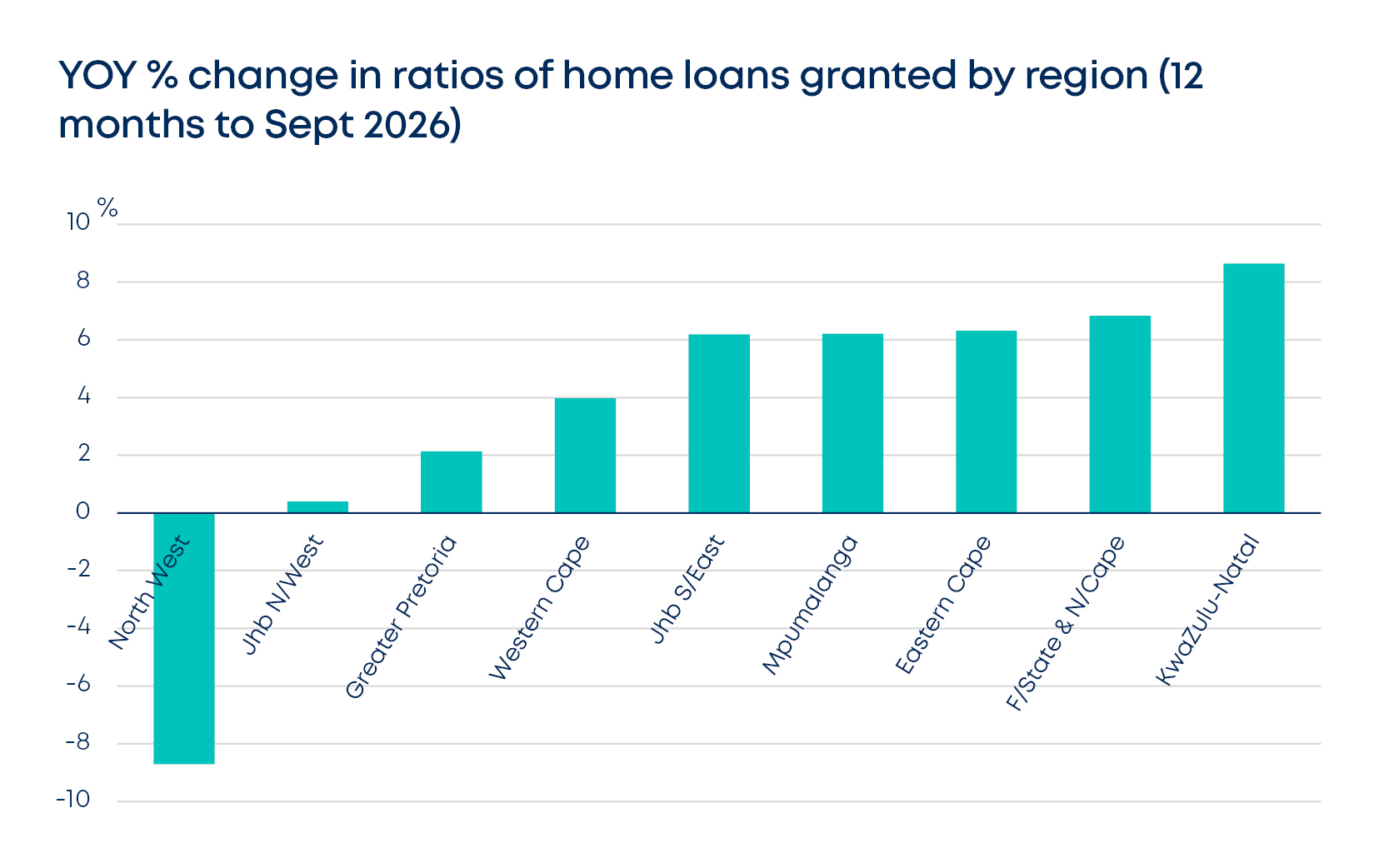
In the 12 months to September 2026, North West was the only region where the ratio of loans granted to applications declined. Greater Pretoria remained the region with the highest approval ratio at 75%, followed by the Western Cape and KwaZulu-Natal at 72%. KwaZulu-Natal recorded the largest year-on-year improvement at 8.7%, followed by the Free State and Northern Cape at 6.8%.
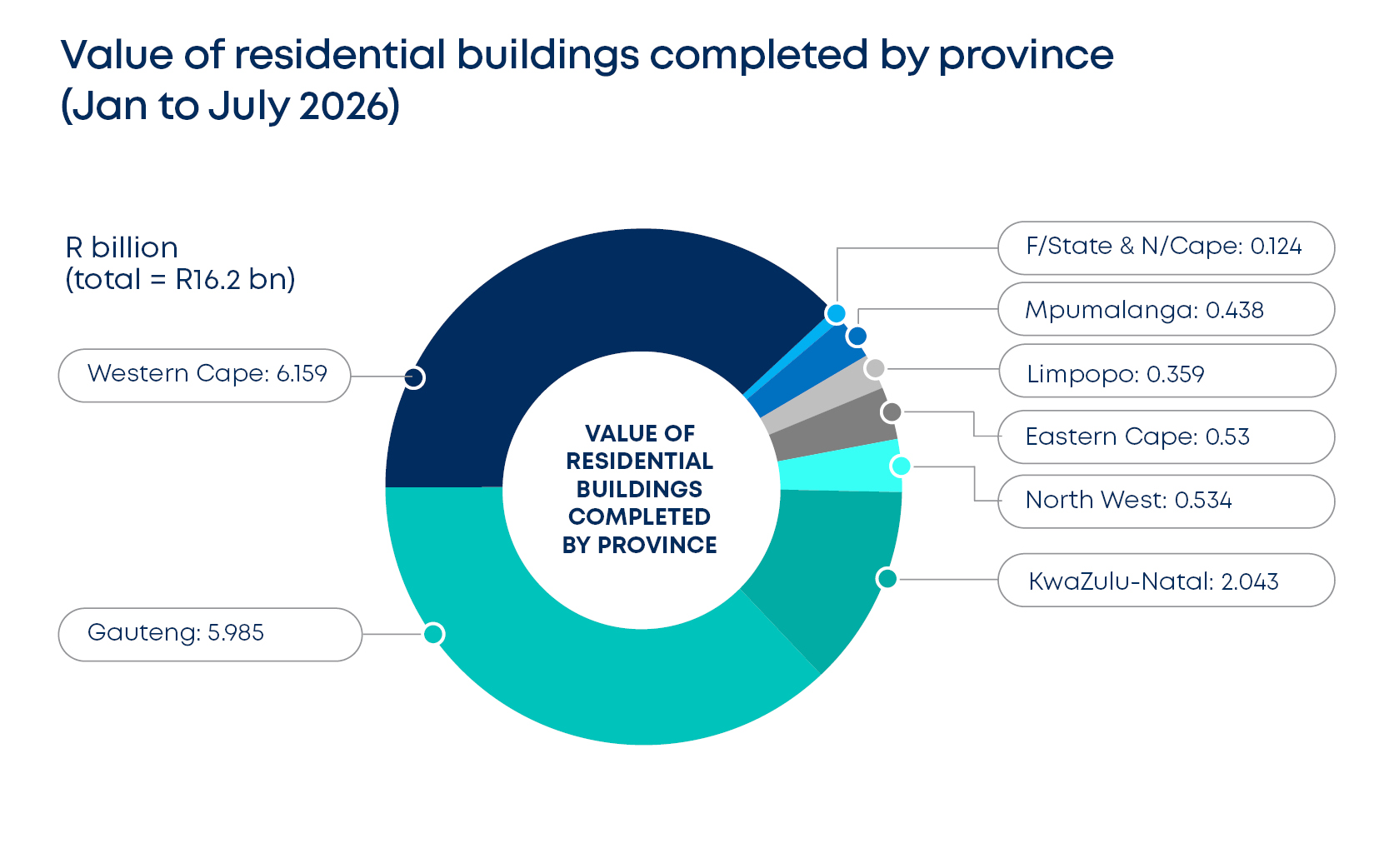
On the supply side, the value of residential building plans passed rose by 8.4% year-on-year in the first seven months of 2026, with plans for flats and townhouses up 21%. Completions are lagging, however, with the completion ratio down 12% year-on-year over the same period, and the brief expects this slow pace to keep putting upward pressure on house prices. The Western Cape led the country with R6.2 billion worth of houses and flats completed between January and July, followed by Gauteng at R6 billion. Together with KwaZulu-Natal, these provinces accounted for 88% of the R16.2 billion total.
The construction sector itself is recovering. The Afrimat Construction Index rose by 5% quarter-on-quarter in real terms in Q2, and construction employment increased by 95,000 over the 12 months to June 2026. Dr Roelof Botha, economic advisor to BetterBond, says that because completed residential building values still trail house price growth, he expects a shortfall in this market down the line.
Interest rates remain the key uncertainty. Botha argues that because the recent rise in the Consumer Price Index is driven by supply-side factors and the labour market is static, tighter monetary policy may do more harm than good. He expects a normalisation of global fuel cargo shipments to bring inflation down sharply, which could pave the way for lower interest rates.
“There are encouraging signs of stability across the residential property market, with home loan activity holding up and house price growth continuing to outpace inflation,” says Stephan Potgieter, CEO of BetterHome Group Mortgage Origination and BetterBond. “At the same time, higher deposit requirements and renewed interest rate pressure mean affordability remains an important consideration for buyers.”
Read the full October 2026 BetterBond Property Brief here.