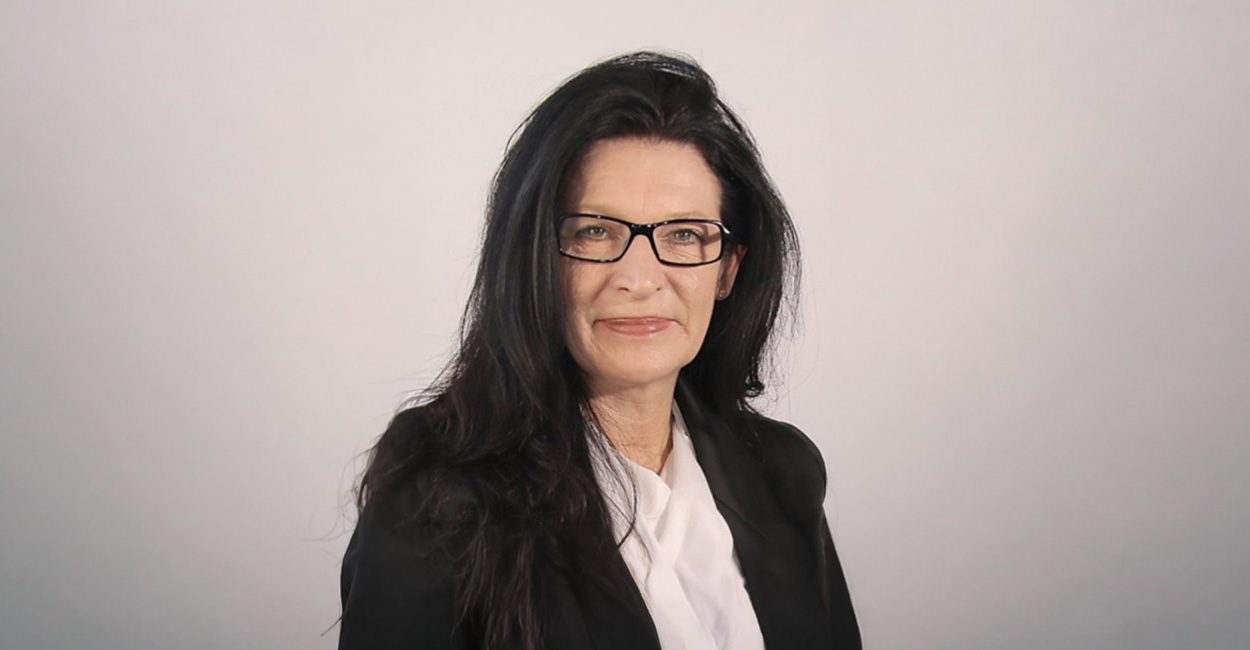

MAIN IMAGE: Ashley Habib – registered assessor and project lead at Developing Skills for Life, Lee Russell – skills facilitator at Rawson Property Group, Adrianne du Toit – head of stakeholder relations at Rebosa
Editor
The first time PPRA communicated with PDE exam candidates on Thursday, 14 May, was at 09:34 via Facebook, regarding an exam due to start at 08:00. Industry leaders believe that what followed points to a series of systemic failures at the Regulator.
The PPRA has replied to our questions – read their responses at the end of the article.
Portal failure, again
Property practitioners writing the Professional Designation Examination (PDE) on Thursday, 14 May 2026, faced more than two hours of chaos after the PPRA’s examination portal failed at the scheduled start time of 08h00. Papers were eventually distributed via email; the commencement time was pushed back to 10h00, and for many candidates, the emails had not yet arrived by the revised start time. The situation deteriorated to the point that exam papers were posted on external websites and in WhatsApp groups, allowing candidates to access what the regulator’s systems could not deliver.
It is the latest in a long line of examination failures that have drawn sharp criticism from the industry body, and it comes less than three months after the PPRA committed, in writing, to implementing corrective measures following an earlier debacle in February.
Promises made, promises broken
Last week’s failure follows the troubled PDE sitting of 12 February 2026, after which Rebosa submitted a formal complaint to the PPRA documenting a cascade of failures: an unstable portal throughout the registration period, candidates without seat numbers the day before the exam, an incorrect PDE 4 paper uploaded to the portal on the morning of the sitting, and multiple errors identified in the PDE 5 paper.
In its formal response dated 16 February 2026, the PPRA acknowledged all of these failures. It advised that it was in the process of acquiring a dedicated end-to-end examination portal to improve system stability, automate payment allocation and streamline enrolment. It further committed to strengthening the quality assurance of examination papers, improved coordination between its Finance and Education departments, and enhanced communication protocols.
Three months later, none of those commitments had translated into operational change.
The registration period for the May sitting opened on 1 April 2026, with the portal already unstable. The PPRA was forced to extend registration deadlines to 8 May, and when Rebosa repeatedly requested that a manual registration process be implemented to ease the pressure on candidates, officials in the PPRA Education Department reportedly advised candidates to simply “try every day” because the system was “on and off daily.”
A morning of mounting anxiety
On the morning of the examination itself, candidates sat refreshing screens as the portal failed to open. At approximately 08h14, Rebosa advised training providers of technical difficulties and that the exam was expected to become available at 08h30. That deadline passed without resolution.
Ashley Habib, registered assessor and project lead at Developing Skills for Life, was among those on the front line managing anxious candidates. “As training providers and facilitators, we were placed under immense pressure as we attempted to assist anxious candidates who were desperately trying to access the examination,” she says. “Over a two-hour period, we received continuous calls, WhatsApp messages, screenshots, and emails from practitioners seeking guidance and reassurance. Many candidates feared that they would be disadvantaged or penalised through circumstances completely beyond their control.”
Lee Russell, skills facilitator at Rawson Property Group, had approximately 50 practitioners writing PDE 4 and 5 on the day. “Practitioners began to panic when they were unable to access the examination after the scheduled start time of 08:00, and anxiety levels increased as time passed,” she says. “This situation resulted in many practitioners having to reschedule afternoon appointments and further heightened their anxiety. Some practitioners had received no communication from the PPRA after registering and paying for the examination, which caused concern about whether they would receive the examination papers at all.”
Habib notes that the disruption had real-world consequences beyond the exam room. “Some candidates had arranged work commitments, travel schedules, and family responsibilities around the examination timetable. One learner within my own group had a scheduled flight later that afternoon and was left in an extremely difficult position due to the delays and uncertainty surrounding the release of the paper.”
When the papers had still not been received by 1000, Russell obtained them with assistance from Rebosa and distributed them via the practitioners’ WhatsApp groups. When they arrived, the papers still reflected the original examination times, adding further confusion. Meanwhile, Rebosa had published the papers on its own website so that candidates who had fallen through every other gap could at least access what they needed to write.
“Many practitioners felt overwhelmed by the stress and expressed an inclination to give up,” says Russell. “The heightened stress and uncertainty caused some practitioners to initially struggle with focus and concentration during the examination.” Despite this, all of her practitioners ultimately completed the exam. “My experience was that our practitioners were incredible throughout what was an extremely stressful situation. I believe a major factor in their ability to persevere was the confidence they had gained through the preparation course attended at the Rawson Training Academy.”
Even after papers were distributed via email at approximately 10h:00, Habib says the situation remained unresolved for some. “Several practitioners reported that they still had not received the communication. This resulted in further panic, confusion, and inconsistency in the examination process.”
“Years of systemic failure”
Adrianne du Toit, head of stakeholder relations at Rebosa, says the organisation finds it impossible to accept that the PPRA continues to treat failures of this magnitude as mere inconveniences.
“These are not isolated incidents that can simply be excused with an apology. These are years of systemic administrative and technological failure that continue to plague PDE examinations and registration processes. No credible educational institution, university, professional body or examining authority would conduct itself in this manner. The complete lack of stability, preparedness and contingency planning demonstrates a concerning disregard for the very practitioners the PPRA is mandated to professionalise and regulate.”
Du Toit says the implications for candidates go well beyond a delayed start. “Property practitioners invest significant time, effort and money into preparing for PDE examinations. These examinations are not optional. Agents are required to qualify to remain compliant and continue operating in the industry. In a commission-only industry, property practitioners already face immense pressure in difficult economic conditions. The additional stress and uncertainty caused by repeated examination failures is both unfair and unacceptable.”
Habib echoes that sentiment, drawing attention to the broader context in which practitioners operate. “Property practitioners operate in an exceptionally demanding environment. Most practitioners do not earn fixed salaries; they work entirely on commission and carry the pressure of serving clients, generating income, and sustaining their businesses daily, often under extremely difficult market conditions. Despite these challenges, practitioners continue to show up every day, committed to serving the public professionally and ethically.”
She says there is a growing expectation that regulation should work for practitioners, not merely around them. “There is a growing sentiment within the industry that the regulatory environment should not only focus on protecting the interests of the public, but should demonstrate greater support, consideration, and accountability toward the practitioners who form the backbone of the sector. Transformation, professionalism, and industry growth cannot be achieved effectively when ongoing operational frustrations and administrative challenges continue to impact practitioner confidence and morale.”
Part of a wider picture
The May failure lands against a broader backdrop of examination dysfunction in the property sector. As Property Professional has reported, the PPRA’s administrative difficulties stretch back years, with repeated portal failures, extended registration deadlines, delayed results, and delayed issuance of Professional Designation Certificates documented across multiple exam cycles since the introduction of the online examination platform in 2021.
What happens now?
The immediate question practitioners and training providers are asking is what happens to the results of the 14 May examination. Candidates wrote under conditions that were, by any reasonable measure, fundamentally compromised. Many did not receive their papers until well after the advertised start time. Some began writing in a state of acute anxiety following two hours of uncertainty. Others scrambled to access papers through WhatsApp groups and Rebosa’s website rather than through the official portal. The exam times printed on the papers did not reflect the actual sitting conditions.
Will the PPRA acknowledge that the circumstances in which this examination was written were not acceptable? Will results be treated as fully valid, and if so, on what basis? If a candidate fails, will they have any recourse, given that the administration of the exam was so plainly irregular? And if the PPRA does acknowledge the failures, what relief, if any, will be offered to those who sat the examination under these conditions?
Rebosa is again calling on the PPRA to provide urgent clarity. “Property practitioners deserve an examination system that is stable, credible, fair and professionally administered. The industry cannot continue to accept recurring examination failures as normal practice,” says du Toit.
The PPRA responds
The following replies have been received from Zandile Mahlangu, executive manager: Education, Professionalisation & CPD at the PPRA:
What went wrong technically, and what is being done to correct this?
The PPRA recently launched a new website aimed at improving accessibility and service delivery to stakeholders, including candidates writing the Professional Designation Examinations (PDE). Unfortunately, during the PDE 4 and PDE 5 examinations held on 14 May 2026, the website server experienced unexpected technical challenges due to the exceptionally high volume of users attempting to access and download examination papers simultaneously.
To address this, immediate interventions have been implemented and further measures are underway to ensure that the website infrastructure has sufficient server capacity and resilience to accommodate high traffic volumes, particularly during critical examination periods. The PPRA is working closely with its service providers to strengthen system performance improve load handling capabilities, and minimise the risk of similar disruptions occurring in future.
What will be done regarding all of the students who either couldn’t finish the exam, or couldn’t get access to it?
The PPRA has issued a notice for practitioners to come forward so they can write the special exam on 26 May 2026.