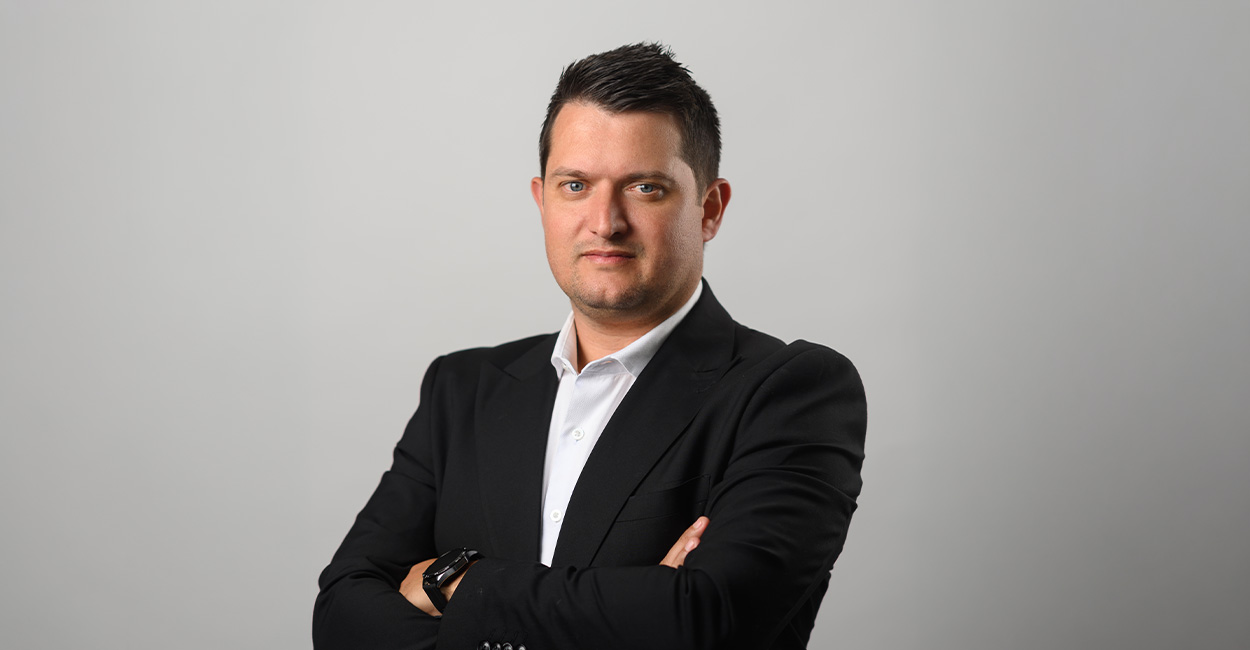
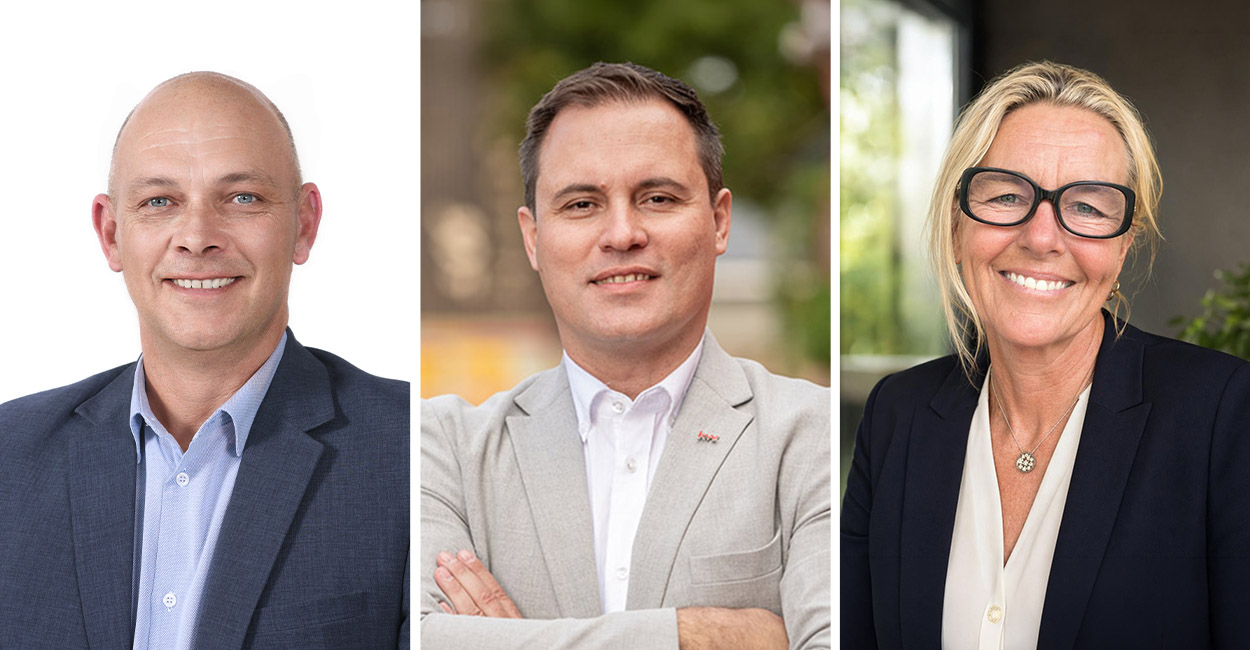
MAIN IMAGE: Stephen Whitcombe – MD of Firzt Realty, Deon Terblanche – CEO of Keller Williams South Africa, Cavy Kelley – candidate property professional at eXp Realty South Africa
Kerry Dimmer
The commission split is no longer the deciding factor. South Africa’s estate agents are asking harder questions before signing, and the agencies winning talent are the ones with better answers. Three industry voices share what’s really driving agent movement right now.
Beyond short-term incentives
Stephen Whitcombe, MD of Firzt Realty, frames agency-switching as a high-stakes strategic pivot rather than a reactive move.
“Changing agencies is a pivotal career move,” he says. “Agents need to ask themselves whether the new environment will make them an even better, more productive agent? Any move should look beyond short-term incentives with a focus on the structural factors that genuinely support long-term success.”
Whitcombe suggests this includes: training and mentoring, inclusive of personal development; marketing support and lead generation; integrated technology; area allocation and growth potential; and commission splits. He does, however, caution against the allure of immediate gains like commission structures because “transparency matters even more.”
“Agents need clarity about what they will earn, when they are paid, what they are required to pay for, and the value they receive in return. “A higher commission split is meaningless if the agency provides no strategic support,” he says.
Key questions need to be answered:
- What systems does an agency have in place to help you gain new business?
- Does it have a robust digital marketing ecosystem?
- Does it provide tools or help you make your listings stand out?
- Is there a well-developed intra-agency networking and referral system?
Whilst most agency brands offer training, mentoring, and personal development opportunities, the most successful, says Whitcombe, also provide access to the latest market data and consumer trends, legislation, and technologies.
“These days, agents should expect effective, integrated systems, from CRM to listing tools, compliance processes, and transaction management that make their lives easier and increase their productivity, as well as comprehensive administrative support.”
These highlight the credibility of the agency brand, its leadership, and culture. Whitcombe indicates that clients are also paying attention to brand strength, which, in a trust-sensitive market, can directly influence the mandates agents can secure.
“Switching agencies should never be an emotional move or a reaction to a temporary slump. Making a change is about aligning yourself with the right team, the right tools, and the right leadership. It needs to be a well-considered choice that you believe will transform your career trajectory.”
From transactions to entrepreneurial thinking
Deon Terblanche, CEO of Keller Williams South Africa, offers a perspective on how emerging models are changing the landscape.
“We’re seeing three patterns running concurrently,” he explains. “Agents moving between established agencies, agents breaking off to start their own businesses, and a smaller but meaningful group leaving the industry altogether.”
The exits, he notes, are largely from those who entered during the post-2021 rebound without a sustainable foundation. “Tighter margins and longer sales cycles have flushed them out. The other two groups are a different story. Those agents aren’t leaving real estate … they’re leaving the model they were in.”
KWSA’s model is ‘attraction-based by design.’ “The agents coming to us are not merely chasing a signing bonus; they’re looking for a business-building environment, a training and coaching infrastructure, and a long-term wealth mechanism. Commission comes up in the conversation, but it’s rarely the only reason an agent actually moves,” says Terblanche.
He highlights three of those reasons:
- The business model. “Once an agent realises that their career is a business, not a job, they start looking for a model that rewards business-building, not just listings.”
- The teaching. “If the brokerage isn’t equipping the agent to run a real business (financial models, lead generation systems, team-building, leverage), the agent outgrows it quickly. Once that gap opens, the agent leaves.”
- Long-term wealth. “A commissioned real estate agent with 20 years in the game and nothing residual to show for it has a serious problem. Agents are looking for a model that creates an asset they can leave behind, not just an income they have to keep earning.”
KWSA’s model is called KW’s Profit Share. “A KW agent sponsors another agent into the network, who then receives a percentage of the franchise’s income on every sale that the sponsored agent completes. Critically, the sponsored agent is not paying for it. It comes from the franchise’s share, not the agent’s commission. That sponsor then sponsors others with income extending across a multi-level ‘growth tree.’
“The result is a second income stream that vests over time. It is transferable: agents can pass it on to their families. It is the closest thing a commission-based agent will ever have to a pension.”
This underscores that agents are starting to reconfigure their careers as scalable businesses. “These movements aren’t a threat to the industry. They are signals. Agents who treat their career as a business will always find their way to the model that rewards that approach.”
The talent reality
From a talent strategy perspective, shifts are even more explicit, as defined by Cavy Kelley, a candidate property professional at eXp Realty South Africa, who has a background in senior and executive talent and recruitment. She positions current-day agent-switching movements as an increasing commercial sophistication among agents. She agrees with Whitcombe and Terblance that the “conversation has fundamentally shifted from ‘which brand’ to ‘which model.'”
Kelley’s agreement also aligns with the need for agencies to present a comprehensive value proposition: commission structures, overheads, flexibility, digital infrastructure, and income beyond transactional income. “The rise of cloud-based platforms and remote working has further accelerated this shift. Genuine digital support is a baseline expectation, particularly among agents who have been in the industry long enough to know what they were missing.”
Kelley shares a personal perspective as a case in point. “I am approaching 57. If I do not do something drastically different to the traditional real estate model, I will not make it to 60 in this industry – never mind building something sustainable for the next 15 years. I say that not with fear, but with clarity.
“There are extraordinary agents who will not be players in the next 18 -24 years or sooner, because they are being lulled into believing that AI cannot replace the agent-client relationship. They are right, but they are missing the more urgent truth: agents who embrace AI tools and position themselves on global platforms will replace the ones who don’t.”
High desk fees, limited tech, and commission splits that made sense a decade ago are also compressing agent earnings in ways that are becoming unsustainable. “The agents who are thriving are those who have aligned themselves with models that have lower overheads and multiple income streams built in,” says Kelley, who warns that the shifts in play are not gradual but exponential.
“The gap between adopters and non-adopters is widening at a pace that many underestimate. This is not a gentle curve; it is a black hole. And it is opening faster than most realise.”
The agency differentiator
As these shifts start to grip, agents are more focused on how they layer and integrate their own business goals with agency models, income structures, and long-term trajectories. The agencies that will lead in agent desirability will be offering the most relevant ecosystems that build models of long-term value for the agent.