
Partner content
South Africa’s residential property market is proving remarkably resilient. Stable interest rates, improving affordability, and steadily rising household incomes are keeping buyer confidence intact, even as banks continue to nudge up their deposit requirements.
Higher deposits tempered home loan applications in July, yet more home loans were approved, average home values held their ground, and first-time buyers reached a new record average purchase price. The latest BetterBond Property Brief sets out what is driving home loan activity, affordability and regional performance, and where the opportunities lie for property practitioners.
“It’s encouraging to see the market holding up well despite ongoing economic uncertainty,” says Stephan Potgieter, CEO of BetterHome Group Mortgage Origination and BetterBond. “More home loans are being approved, affordability has improved over the past two years, and buyer confidence remains resilient. That creates real opportunities for South Africans looking to take the next step on the property ladder.”
Prime rate on hold
The Reserve Bank’s Monetary Policy Committee kept its benchmark lending rate at 7% in July, holding the prime lending rate steady at 10.5%. For millions of indebted households, that decision brought welcome relief. The committee followed the wait-and-see approach adopted by the US Federal Reserve and the Bank of England, judging the current bout of higher global inflation to be temporary. Benchmark oil prices have continued the see-saw pattern that began with the start of the Iran war, with Brent crude averaging around 75 dollars a barrel over the first ten days of July before climbing back to around 87 dollars on 23 July. Owners of diesel vehicles were in for a shock in August, with a hefty price increase driven by temporary diesel shortages linked to Ukraine’s repeated drone attacks on Russian oil refineries. Even so, inflation may peak soon, supporting the case against overreacting with rate increases in the absence of excess demand.
Tourists favour South Africa
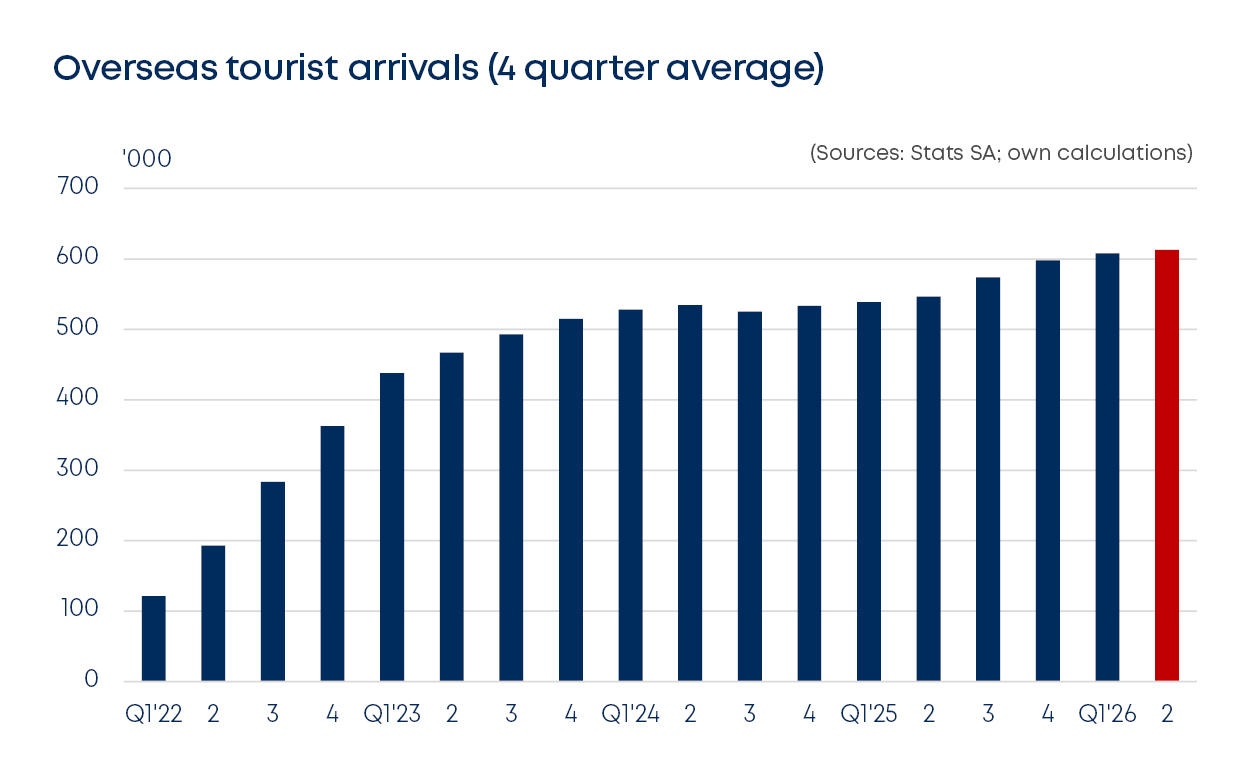
South Africa’s tourism industry has shown scant regard for the global travel hiccup caused by hostilities in the Middle East and soaring fuel prices. UN Tourism expects the conflict to slow international tourist arrivals worldwide to below 3% growth in 2026, yet overseas visitor arrivals to South Africa during the first six months of the year rose by 5.6% year on year, a marked improvement on the growth recorded between 2024 and 2025. The United Kingdom remains the single largest source market, followed by Germany, the Netherlands, France, and Australia. Europe continues to dominate regionally, with North America in second place.
Home loan applications prove sticky
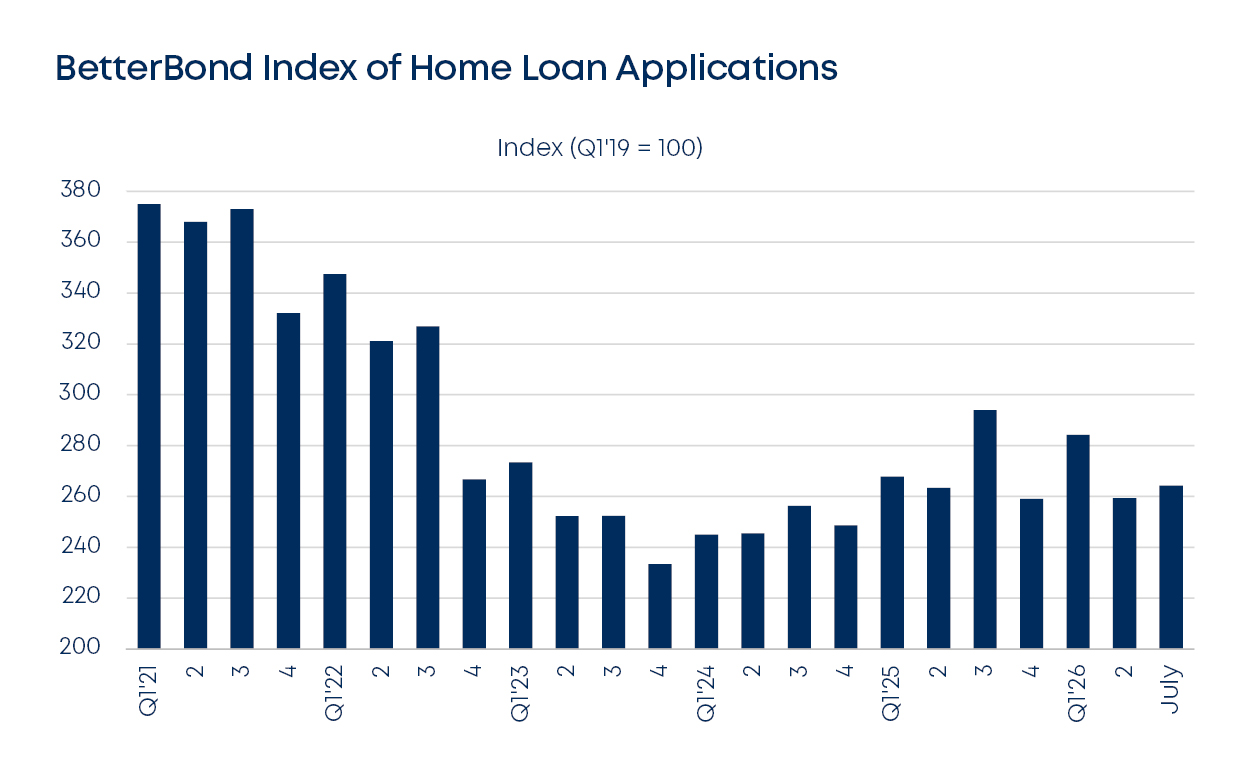
With banks having lifted their deposit requirements back to the levels last seen in early 2024, when interest rates were at a 15-year high, a dip in home loan applications in July was predictable. In the event, the decline was muted at just 1.5% compared with July 2024, and the July figure was actually marginally higher than the average for the preceding three months. Part of the recent softness reflects solid increases in average house prices for both repeat buyers and first-time buyers, with the nominal year-on-year increase for first-time buyers reaching 8%. Encouragingly, the slower pace of applications has been more than offset by growth in loans granted, which rose 4.1% year on year in July and by an impressive 28% since July 2024.
First-time buyers reach a record
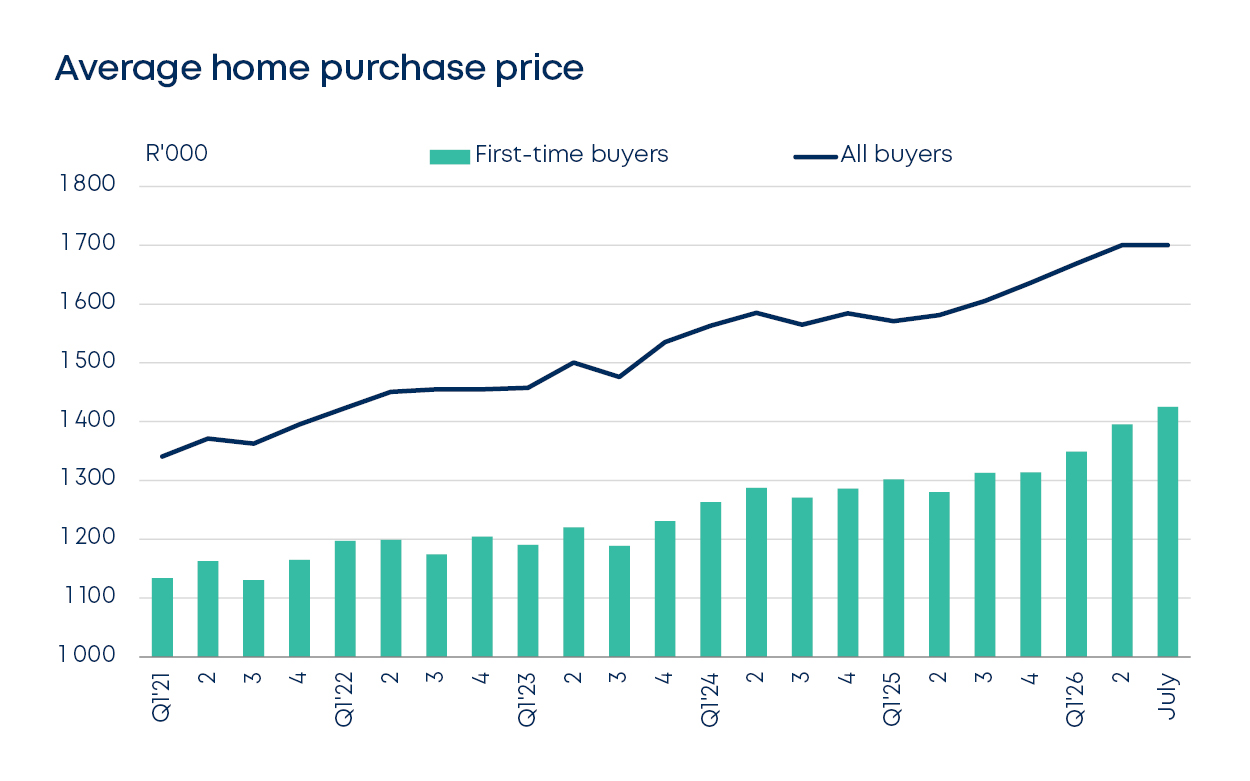
Average house prices held quite steady during July, edging up to just above R1.4 million for first-time buyers while remaining at R1.7 million for all buyers. For first-time buyers, that marked a new record high. The recent rise in the prime lending rate from 10.25% to 10.5%, together with the uptick in deposit requirements, has prevented any meaningful price movement since May. Although average house prices struggled to keep pace with inflation from 2021, that picture began to change once the Monetary Policy Committee started cutting rates towards the end of 2024. Helped by better affordability on repayments and consistent growth in homebuyer incomes, average house prices have risen by 1.1% year on year in real terms for all buyers, and by 3% for first-time buyers.
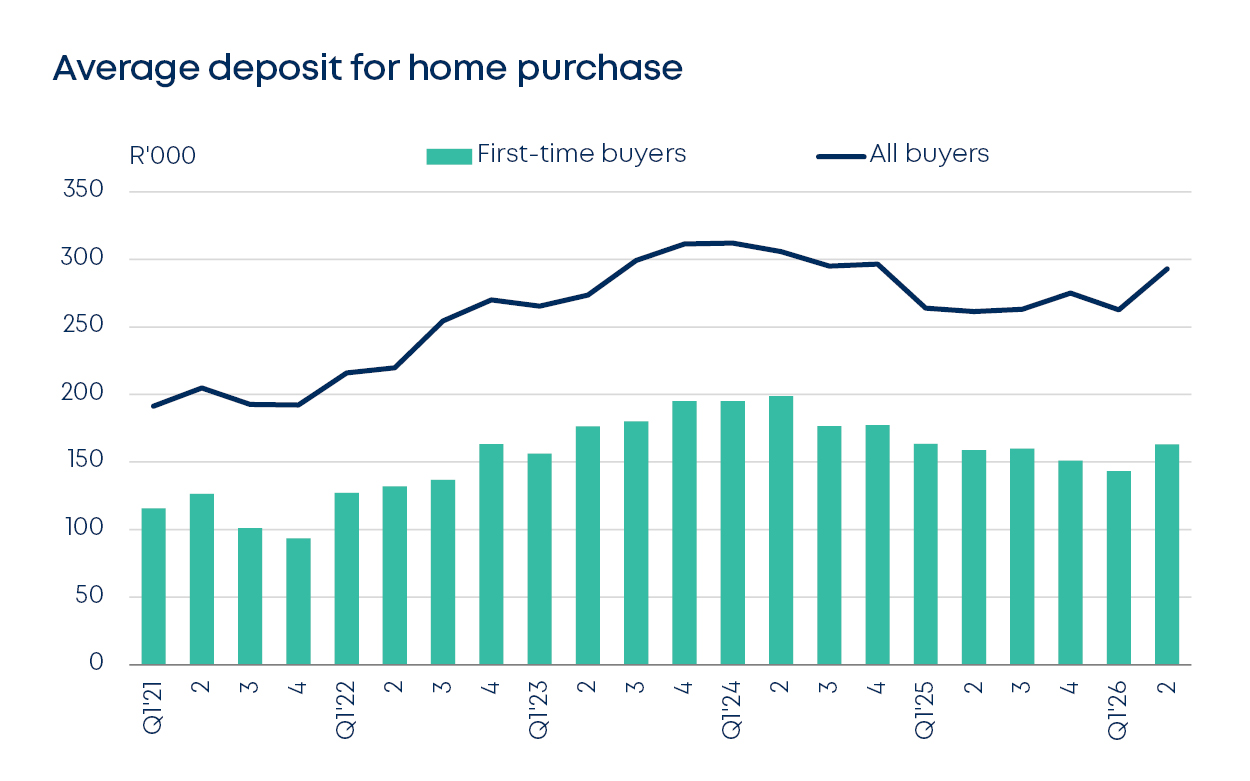
Deposits creep higher
After dropping in June, the average deposit required to buy a home rose again in July, largely because banks were bracing for an interest rate increase that never came. For all buyers, the average deposit was up 9.5% in July 2025, though only 3.3% higher than two years earlier. First-time buyers needed an average deposit equal to 13.2% of the average home price. The good news is that deposit requirements remain marginally below the peaks reached during the relentless rate-hiking cycle of 2022 to 2024, and the recent quickening in house price growth has helped keep the ratio of deposits to prices well below its 2023 high.
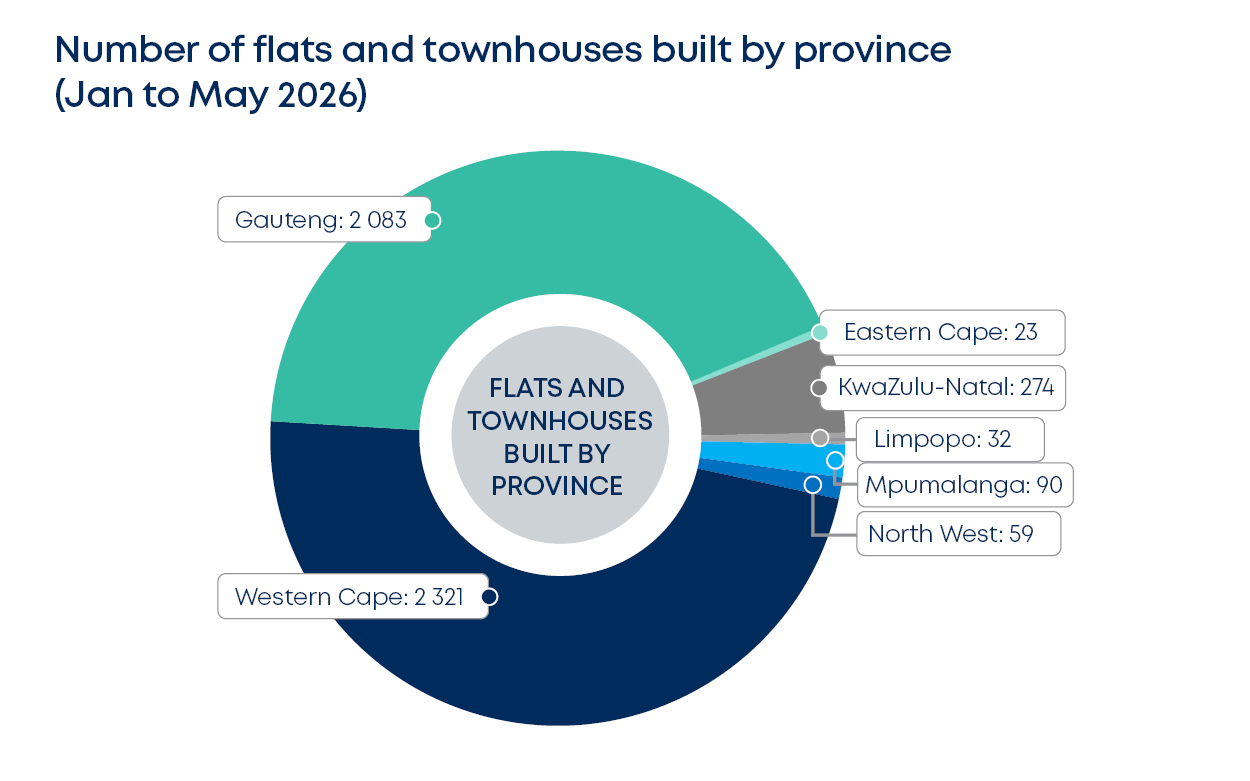
Sectional title concentrated in two provinces
New flats and townhouses remain the preserve of just two provinces. Over the first five months of 2026, the Western Cape and Gauteng together accounted for an average of 880 completed units per month. Gauteng lifted its output by 8%, closing the gap on the Western Cape, while KwaZulu-Natal ranked third with fewer units than a year earlier. Mpumalanga is showing an appetite for more compact dwellings, jumping from just seven units last year to 90 in 2026, albeit off a low base. Slow growth in real disposable household income could well stimulate future demand for smaller residential units, an area worth watching for practitioners and developers alike.
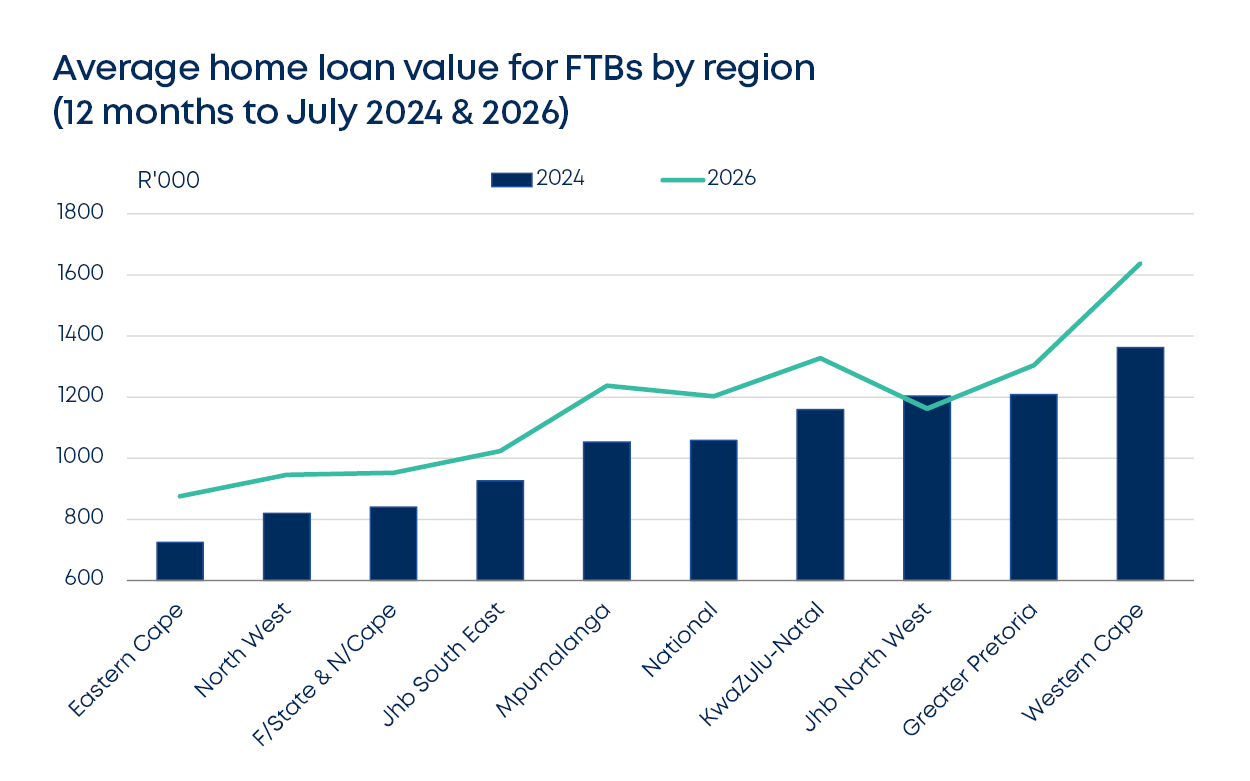
Strong regional gains for first-time buyers
Apart from Johannesburg’s north-western suburbs, every region has posted exceptionally strong growth in average home loan values for first-time buyers over the past two years. The Eastern Cape leads the field with a 21% increase, followed closely by the Western Cape at 20% and Mpumalanga at 18%. The national average home loan value for first-time buyers stood at R1.2 million over the 12 months to July 2026, and only Greater Pretoria recorded a double-digit increase. Lower deposit requirements, the decline in the prime lending rate from 11.75% in September 2024 to 10.5% now, and a consistent rise in first-time buyer incomes have all helped lower the risk profiles of many homebuyers.
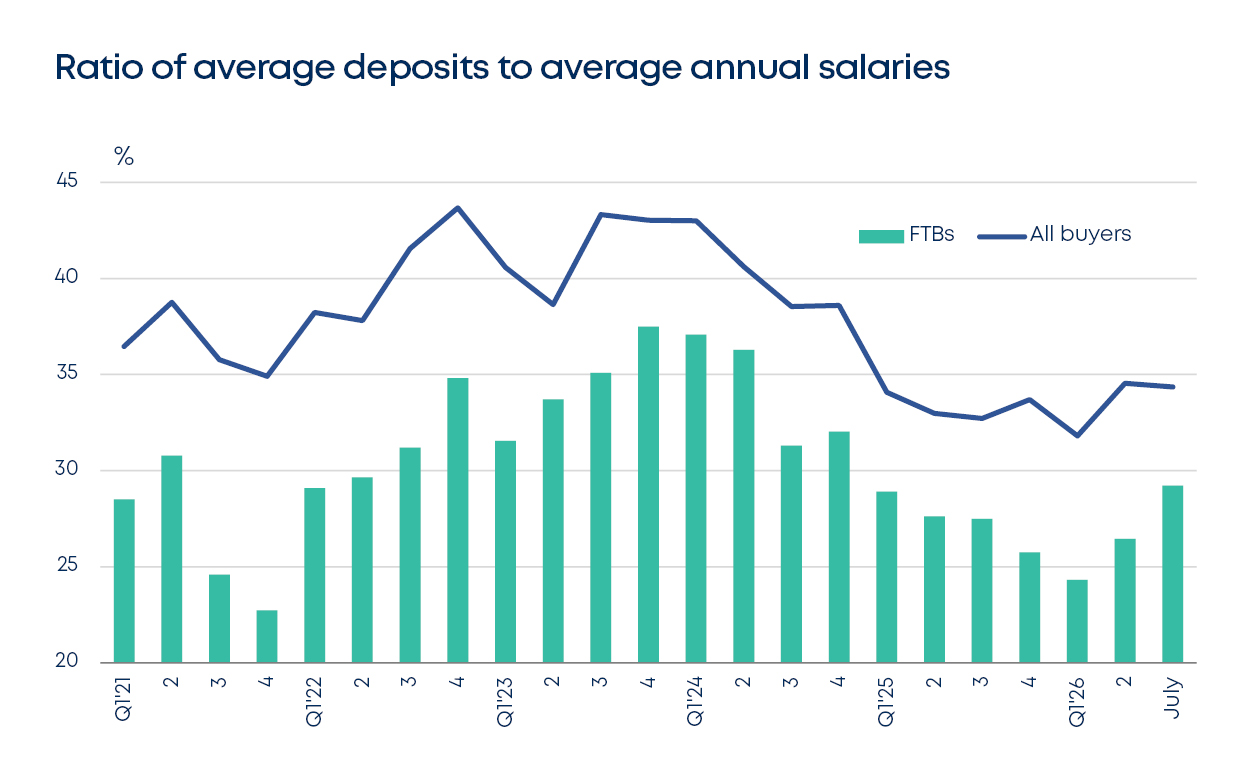
Affordability keeps improving
Banks have been playing yo-yo with deposit requirements ever since the fuel-driven inflation spike, raising them in April and May in anticipation of a rate increase, easing them in June, then lifting them again in July. Fortunately, homebuyers have enjoyed consistent salary increases, and combined with the Reserve Bank’s rate-cutting cycle from late 2024 to early 2026, this has driven a welcome decline in the ratio of average deposits to average annual salaries. Despite the July uptick, the ratio remained lower than a year ago, and for all buyers, it has fallen by 21% since peaking in the fourth quarter of 2022.
Inflation stays contained
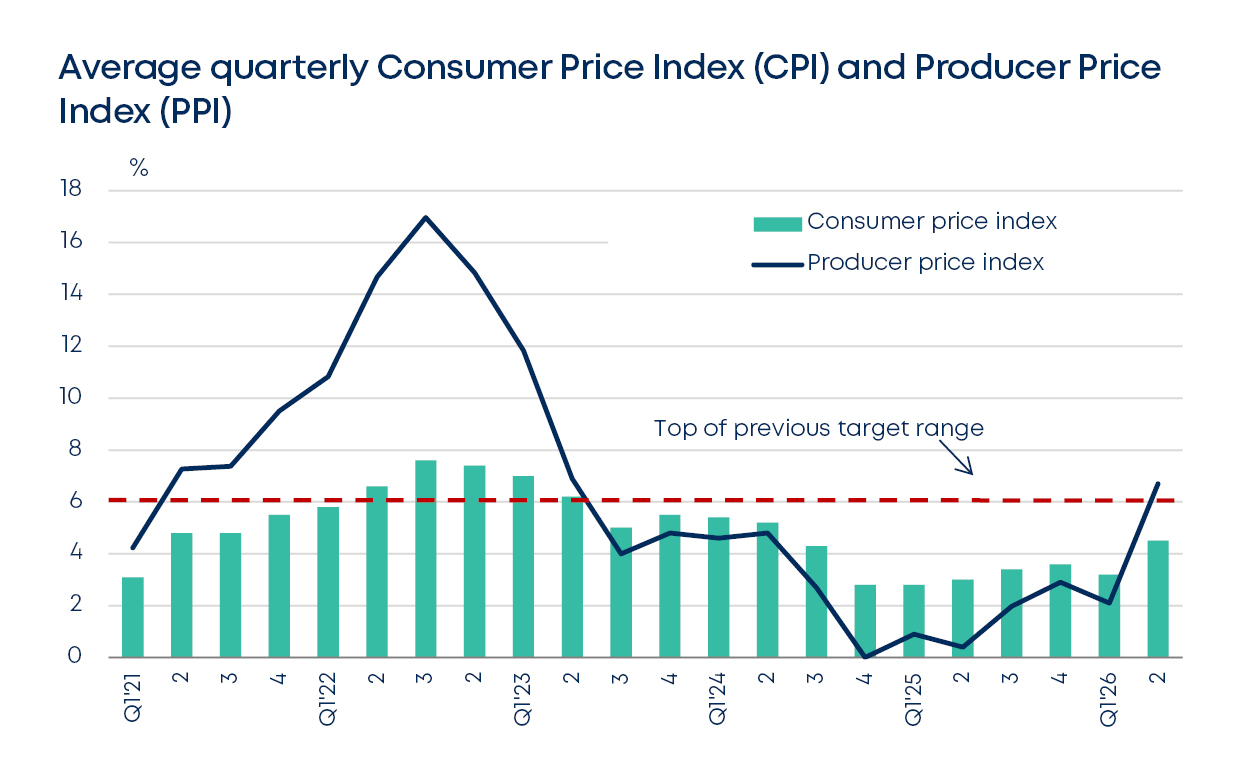
It was always likely that higher oil prices would eventually filter through to producer and consumer inflation. Fortunately for South Africa, the latest increases in the Producer Price Index and the Consumer Price Index have been far less severe than during the previous oil price shock in 2022, which may have played a part in the decision to keep interest rates on hold in July. Food inflation, the dominant expenditure category for lower-income groups, has continued its downward trend, easing to just 1.4%. A normalisation of maritime oil freight should lead to a sharp drop in oil prices, exerting further downward pressure on inflation.
The bigger picture
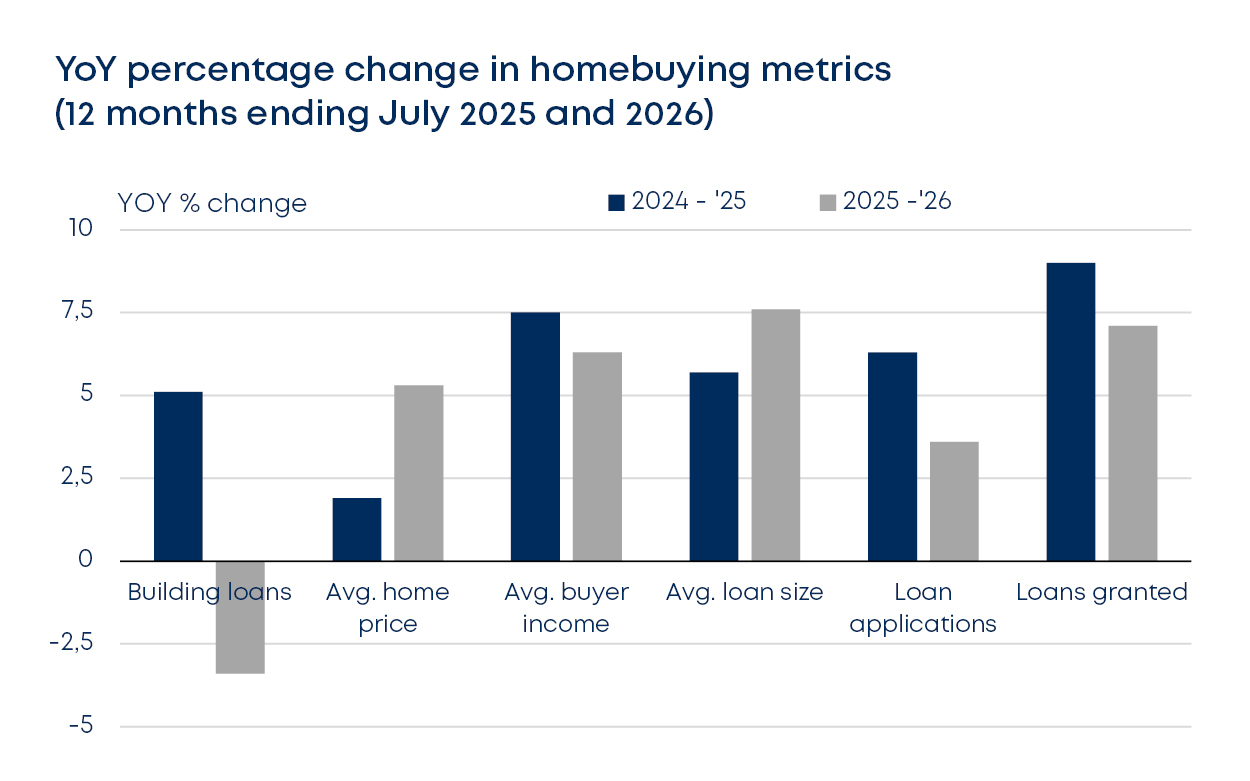
The positive impact of lower interest rates is clearly visible across the key indicators of residential property market activity. Although the growth trends for home loan applications and loans granted have subsided somewhat since the early stages of the rate-cutting cycle, both remain firmly in positive territory, with loans granted up 7.1% over the past 12 months. The one negative movement is the share of loans allocated to new buildings, which, combined with slow growth in building plans approved by the larger municipalities, could point to a future supply deficit. Perhaps the most encouraging trend of all is the stellar growth in homebuyer incomes, which climbed 14% for all buyers over the past two years, underpinning demand and lending real momentum to the market.