
Editor
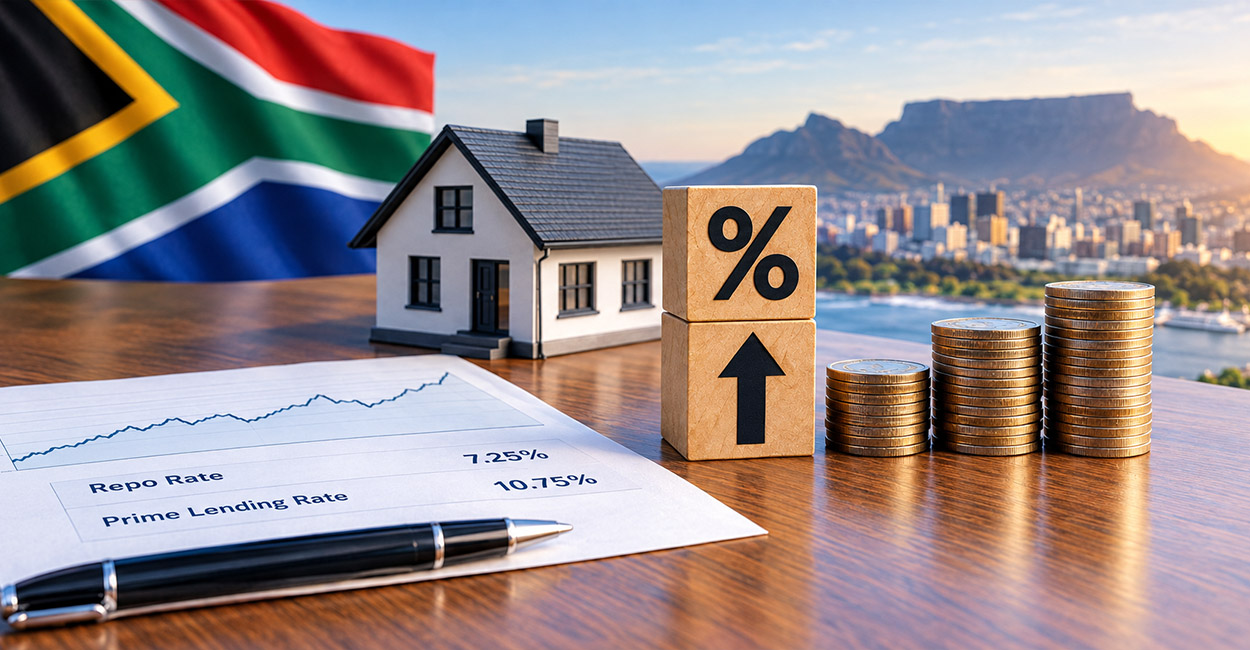
The South African Reserve Bank’s Monetary Policy Committee has raised the repo rate by 25 basis points to 7.25%, taking the prime lending rate to 10.75%. It is the second increase this year, following the May hike. Industry leaders agree that affordability will come under pressure, but they are divided on whether the decision was necessary. Most say the market is well placed to absorb it.
The hike in context
With one interest rate announcement left this year, Rhys Dyer, CEO of the ooba Group, says the increase is a reminder that, despite improving domestic inflation, global inflationary risks continue to weigh heavily on the interest rate outlook.
“While any increase in borrowing costs is disappointing for consumers and the property market at large, it is important to view today’s decision in context,” says Dyer. “Barring the 25-basis point interest rate hike in May this year, the previous increase was in May 2023, reflecting what has otherwise been a relatively stable and supportive bank lending environment.”
Dyer notes that annual consumer inflation edged up to 4.4% in August from 4.3% in July, slightly below market expectations, while core inflation eased to 4.1%. “Inflation remains fairly well contained for now and continues to move broadly in the right direction, offering some relief for households even as global price risks persist,” he says. He adds that the latest BER survey showed inflation expectations easing in the third quarter, with household expectations falling sharply, which suggests that inflationary pressures are not becoming entrenched domestically.
A hike the Bank could have avoided
Samuel Seeff, chairman of the Seeff Property Group, believes the Bank should have looked past what he regards as a short-term spike. “The current inflationary spike is driven by temporary factors such as oil prices rather than runaway domestic demand,” he says.
Seeff says that although the market has remained resilient, interest rates that are higher than necessary have meant no real growth over the past three years, with national transaction volumes still about 16% below pre-pandemic levels. He also points out that the increase takes prime to its highest level since May 2025.
Even so, Seeff maintains that lending conditions remain fundamentally favourable, and that well-positioned buyers can still find good value before the next upward price cycle.
Demand still ahead of supply
Herschel Jawitz, CEO of Jawitz Properties, says consumers face “some short to medium term pain until rates flatten and start to fall again”, with first-time buyers the most exposed. He notes that the increase comes on top of higher petrol prices.
He does not expect the hike to derail the market. “Market activity remains firm, with demand from buyers outstripping supply, making house price growth more resilient even with the latest rate increase,” he says. According to the FNB Property Price Index, national house price growth moderated to 4.9% in August, which Jawitz says still sits marginally above inflation. He adds that the banks remain highly competitive on rate concessions.
Spring buyers still in the market
Ryan Greeff, CEO of Quay 1, describes the hike as largely anticipated. He links it to the Middle East conflict, which has pushed oil above $100 a barrel and kept the rand under pressure, rather than to any meaningful deterioration in the domestic economy. He points out that prime remains well below the 11.75% highs of 2024.
In Cape Town, the timing coincides with one of the busiest periods in the property calendar, as spring and year-end deadlines such as school registrations and relocations bring buyers back into the market. “That seasonal motivation does not disappear simply because borrowing conditions have become slightly less favourable,” says Greeff.
His advice to buyers waiting on the sidelines is not to count on relief in the near term. “Two hikes in four months signal steadily increasing affordability pressure. The window to transact under still-workable conditions remains open, but it is narrowing.”