
Partner content
South Africa’s residential property market is holding its ground despite two interest rate increases this year and rising deposit requirements, according to the November 2026 edition of the BetterBond Property Brief. The brief says steadily rising household incomes are helping to keep homes affordable, with first-time buyers paying record prices and average incomes also at record levels.
Applications dip, but remain above 2024 levels
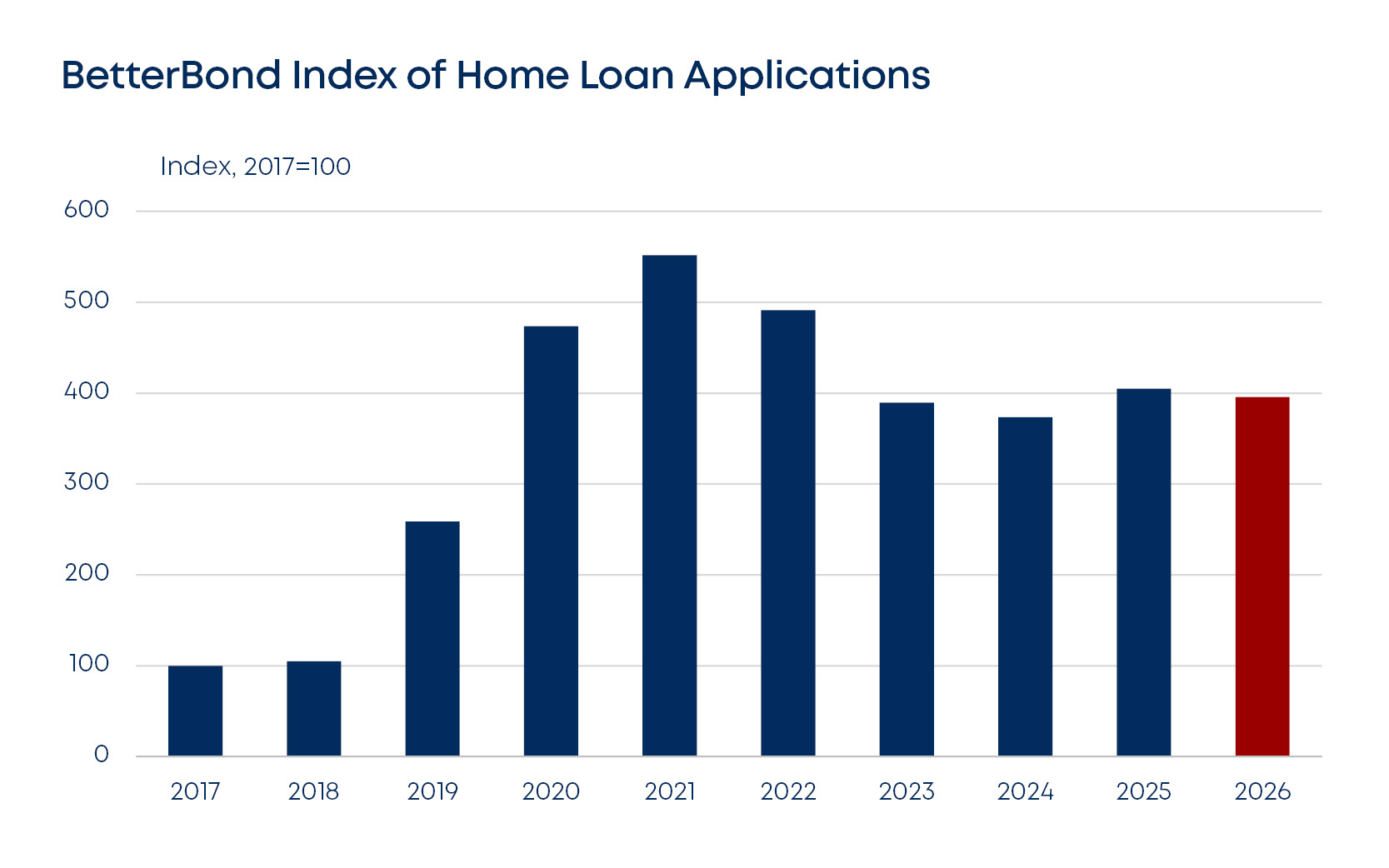
The brief reports that the annualised BetterBond Index of Home Loan Applications for the 12 months to October declined by only 2.2%, helped by a solid first-quarter performance. It notes that the rise in the prime lending rate from 10.25% in April to 10.75% in September has dampened the appetite of some prospective buyers. The brief links the rate increases to higher fuel prices caused by the hostilities in Eastern Europe and the Middle East. Even so, it says applications are 6% higher than when home loan activity began to recover in 2024.
First-time buyer prices reach a new high
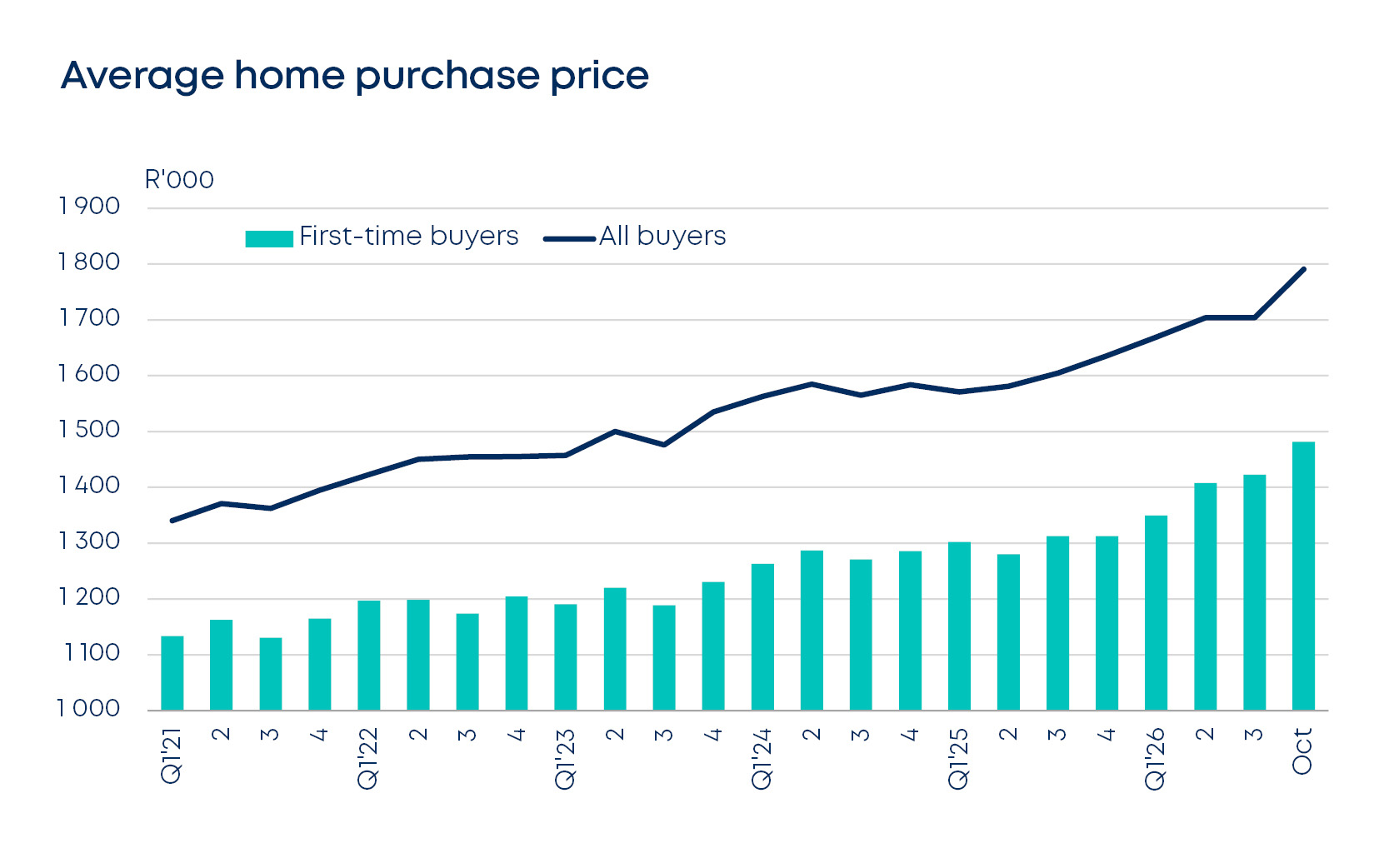
During October, the average purchase price for first-time buyers rose 16.4% year on year to a record R1.48 million, according to the brief. In real terms, this is an increase of 11.9%, which the brief says is also the highest on record. Across all buyers, the average purchase price recorded real growth of 7.1%.
The brief attributes part of this trend to the widening gap between building plans passed and homes actually built in the metros and larger municipalities. During the first eight months of 2026, the value of residential buildings completed fell to 56% of the value of approved plans, from 65.8% in 2025.
Western Cape breaks the R2 million barrier
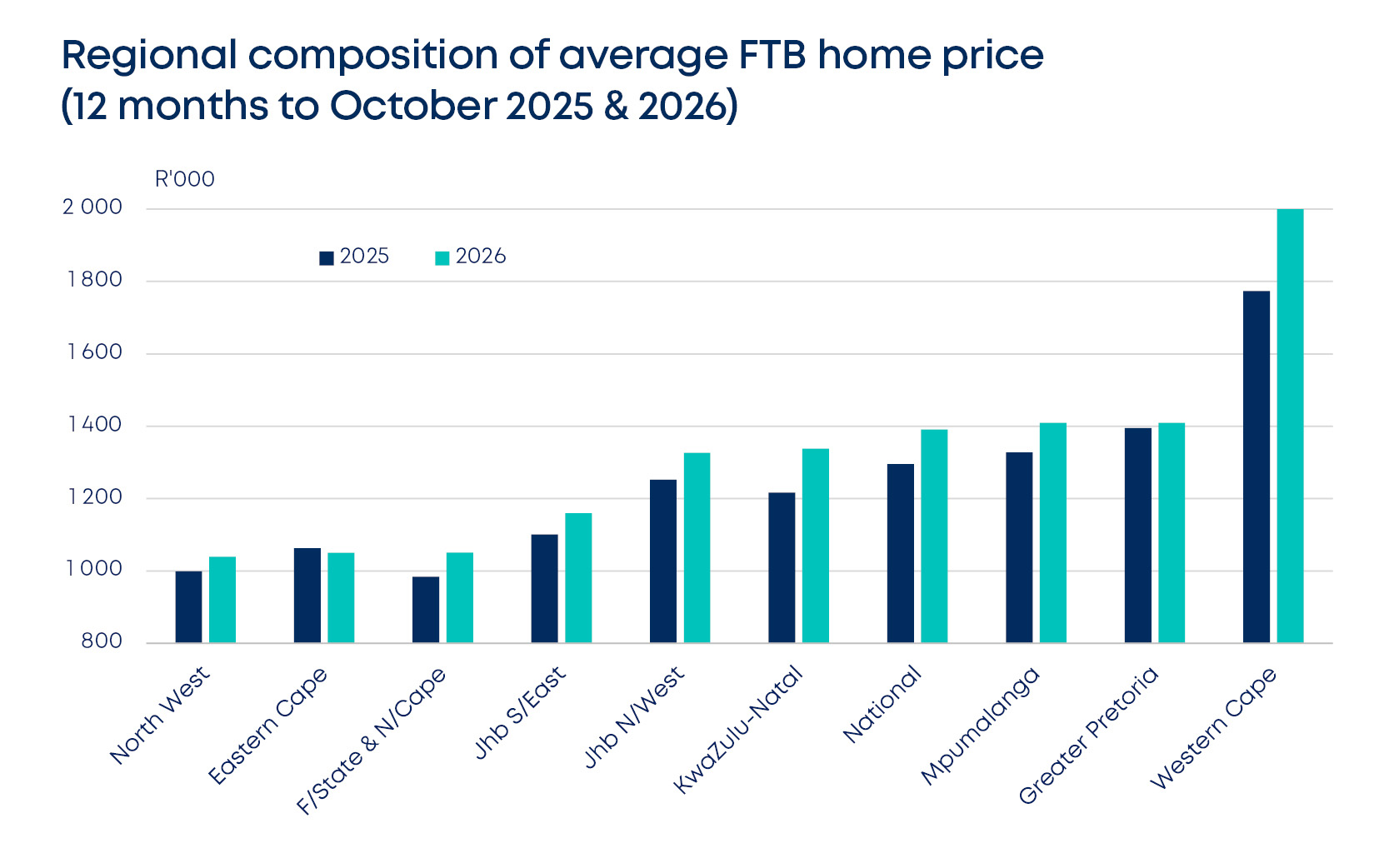
Regionally, the brief reports that the Western Cape led the way with nominal growth of 12.7% in the average first-time buyer home price over the past 12 months, pushing the average first-time buyer price in the region above R2 million for the first time. KwaZulu-Natal recorded the second-highest increase at 10%, although its average first-time buyer price remains below the national average. Mpumalanga now shares the second-highest average first-time buyer price with Greater Pretoria, at R1.4 million.
The Eastern Cape was the only region where the average first-time buyer price declined. Seven other regions recorded growth above the current inflation rate of 4.5%. In Johannesburg, the brief notes that the price premium of the North-Western suburbs over the South-Eastern region increased marginally to 14.4%.
Deposits rise, but less sharply in real terms
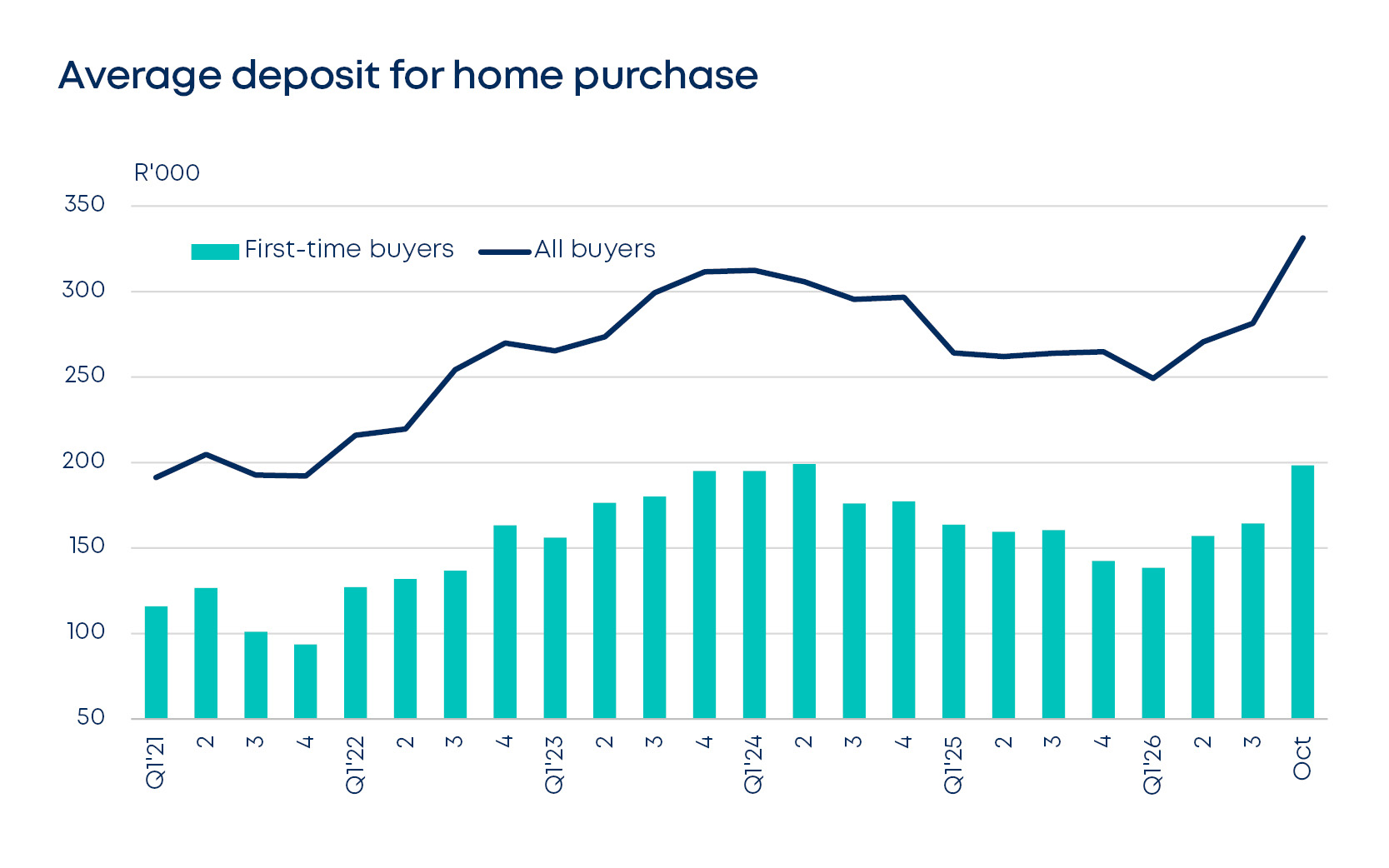
The average deposit paid by first-time buyers rose to just below R200 000 in October, according to the brief. This matches the level last seen in early 2024, when interest rates were at record highs, and repeat buyers’ average deposits reached a new record. In real terms, however, the brief puts the first-time buyer deposit 7% lower than in the first quarter of 2024.
Measured against purchase prices, first-time buyers paid an average deposit of 13.4% in October. Between the third quarter of 2022 and the fourth quarter of 2024, when prime was 11.75%, the average was 14.2%. The brief also points out that a higher deposit reduces the monthly bond repayment.
Incomes reach record highs
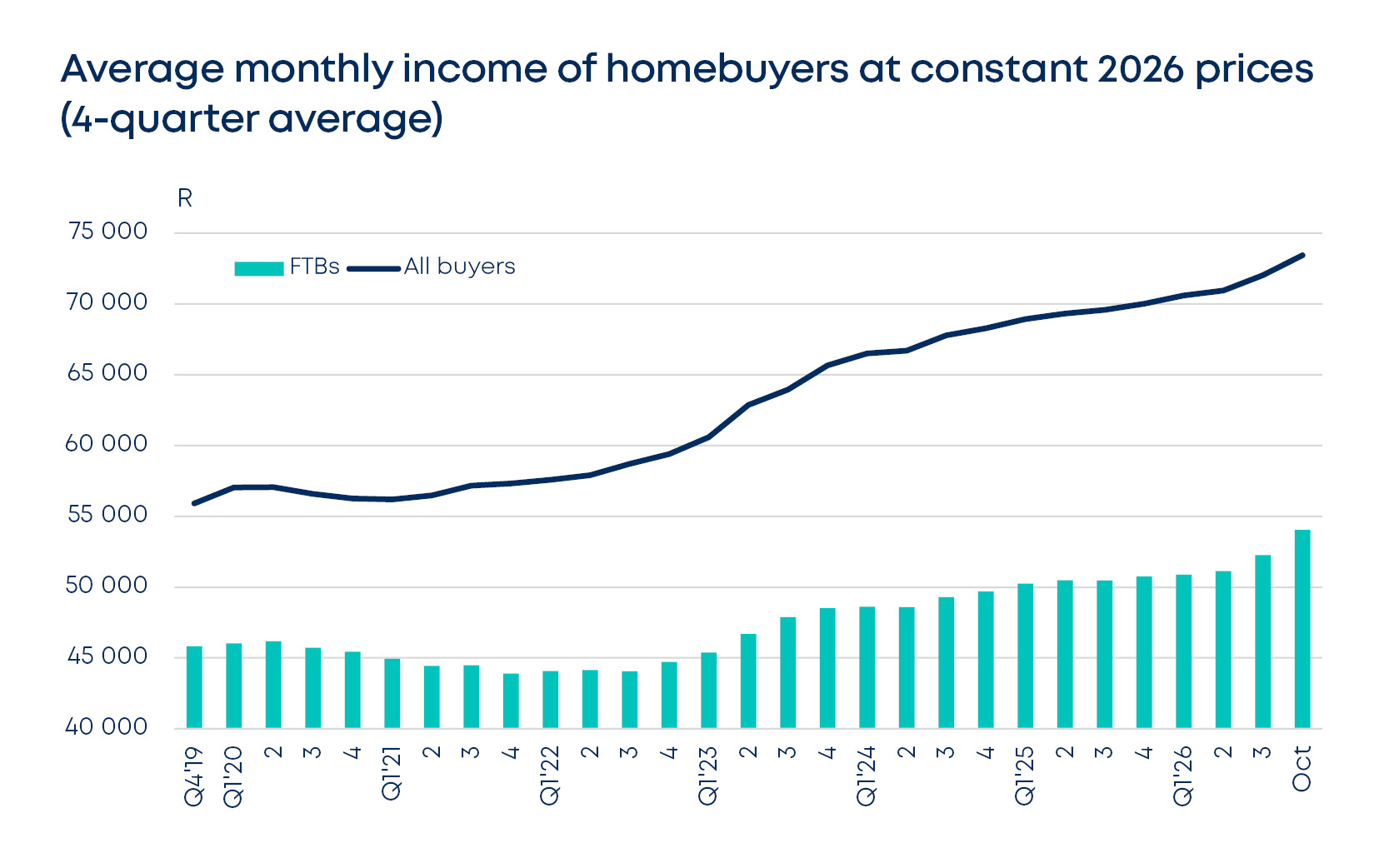
After stalling between the second quarter of 2025 and the second quarter of 2026, homebuyer incomes have picked up again, the brief reports. In October, the average nominal monthly income of first-time buyers was a record R58 200. For all buyers, it was R76 800, also a record. Since October 2021, first-time buyers’ nominal incomes have increased at an average annual rate of 10%. The brief describes buyers’ ability to grow their incomes well above inflation as a key driver of market activity during a period of high interest rates.
Over the 12 months to October, the brief also recorded year-on-year increases of 8.4% in the average approved bond size and 7.8% in the average income of homebuyers. The number of loan applications declined marginally over the same period.
Stephan Potgieter, chief executive officer of BetterHome Group Mortgage Origination and BetterBond, is quoted in the brief as saying: “While higher interest rates and deposit requirements are putting pressure on some prospective buyers, there are encouraging signs of resilience in the market. Rising household incomes are helping to support affordability, while home prices and property activity continue to show strength. There are still challenges to navigate, but the latest figures point to a market that is holding its ground and showing signs of continued opportunity.”
Building plans point to future construction
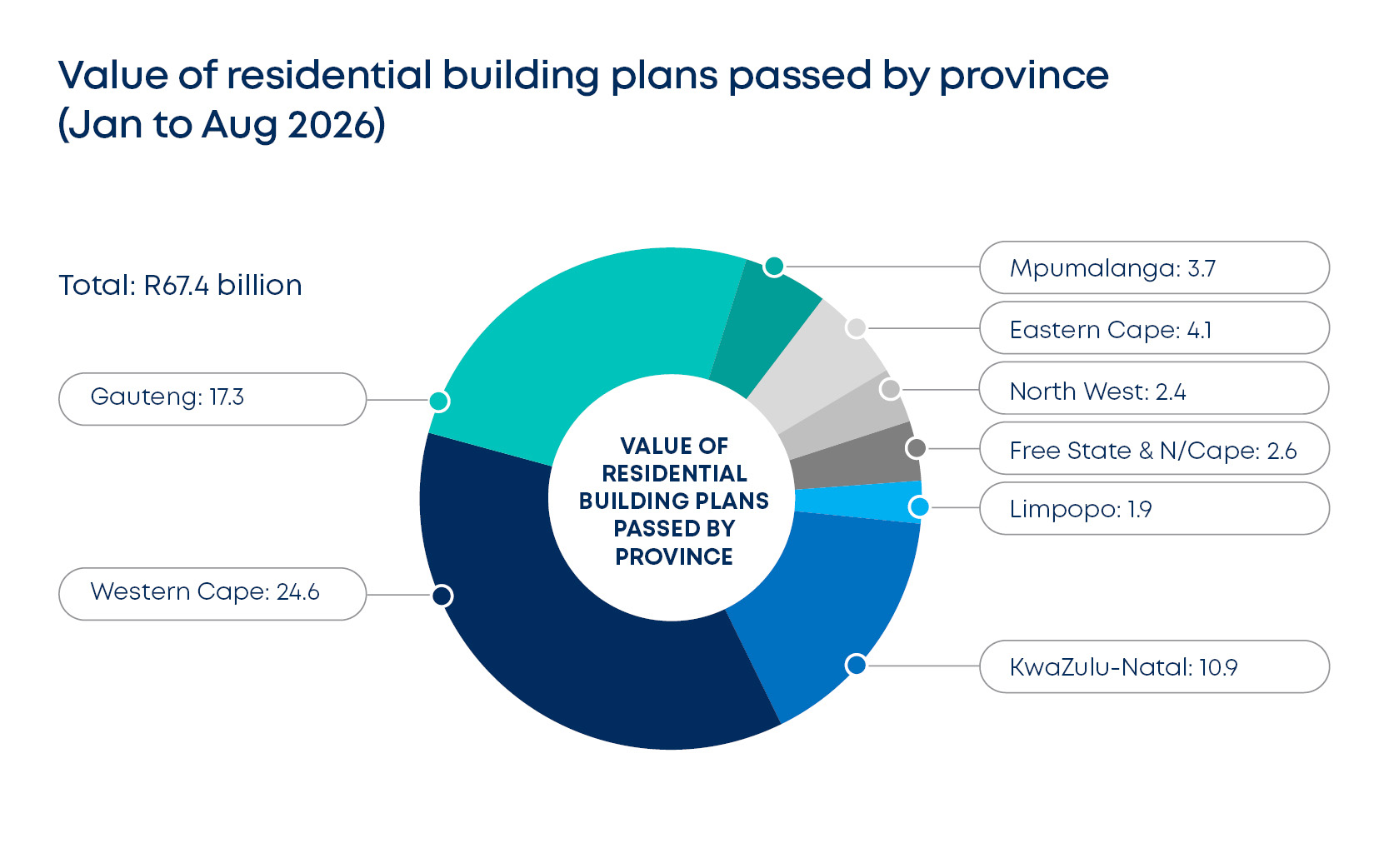
The value of residential building plans passed in the metros and larger municipalities rose 4.7% year on year to R67.4 billion between January and August, according to the brief. It says this should lead to more residential construction in the short to medium term. The Western Cape led with plans valued at R24.6 billion, followed by Gauteng at R17.3 billion and KwaZulu-Natal at R10.9 billion. KwaZulu-Natal also recorded the second-highest increase, at 15.5%.
The brief attributes an 88% increase in plans passed for “other residential buildings”, which include guest houses and holiday accommodation, to the recovery of the tourism industry. Plans passed for flats and townhouses rose 18%.