
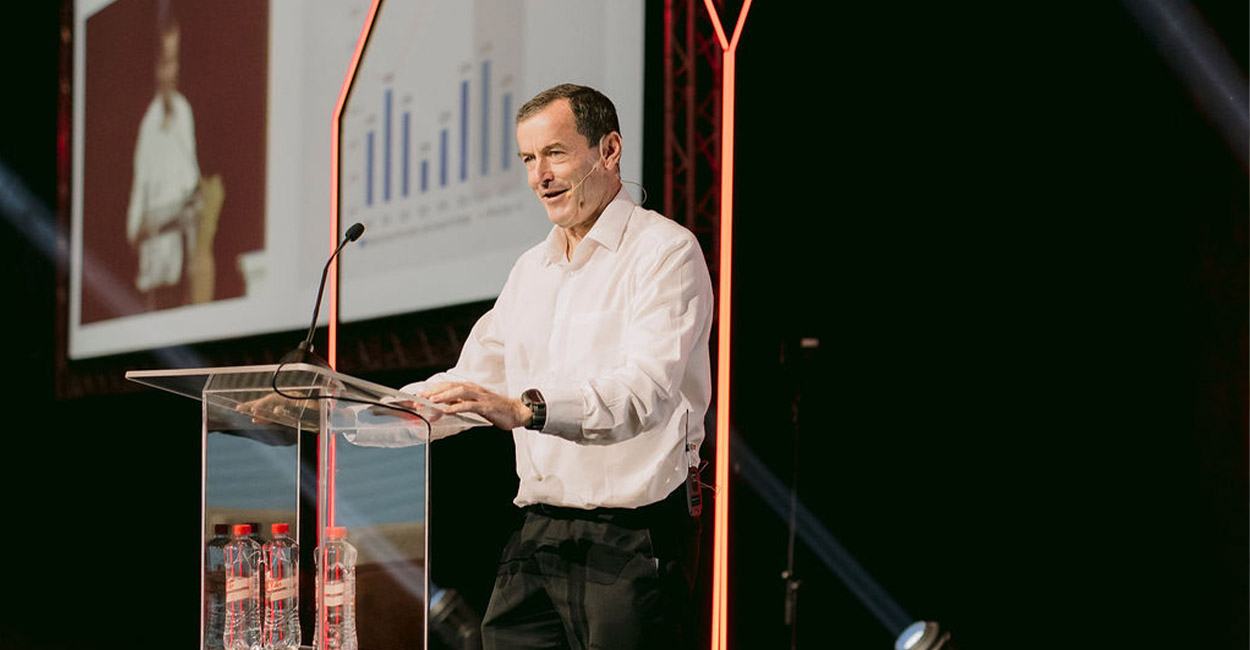
MAIN IMAGE: John Loos – independent economist and REIS keynote speaker
Private Property
At the 2026 Real Estate Industry Summit held in Cape Town during March, Private Property invited independent economist John Loos to deliver a keynote address. His message for real estate agents was clear: understanding the broader economy is no longer a ‘nice to have’ skill; it is crucial to how properties are priced, marketed, and ultimately sold.
“The property market does not operate in isolation,” said Loos. “It responds directly to interest rates, inflation, global events, and local economic performance. Agents who grasp these dynamics are better positioned to guide clients, manage expectations, and close transactions in a more complex operating environment.”
The market has certainly become more complex over the past quarter. As Loos pointed out, South Africans opened 2026 with growing optimism around further interest rate cuts, which would have boosted affordability and transaction volumes. However, global volatility -particularly geopolitical tensions and the risk of rising oil prices – has shifted that outlook, with interest rates now expected to remain on hold in the near term.
Housing price growth à la the interest rate
While the market has shown signs of recovery, largely due to the cycle of interest rate cuts, growth remains moderate rather than explosive, explained Loos.
“Given that property is fundamentally a credit-driven market, even small changes in borrowing costs have a significant effect on buyer behaviour. We’ve seen this with the previous rate cuts that supported a recovery in demand, but their full impact is still filtering through the system.
“Without further cuts in the short term, the market is expected to maintain a steady pace rather than accelerate. As it is, while prices have been increasing at a mid-single-digit pace, indications are that growth may have peaked early in the year, but this is likely to soften slightly as the months progress.”
Affordability should be top of mind
For agents, this changes the tone of engagement with buyers and sellers. It is no longer about anticipating rapid improvements in affordability but rather working within a steady, moderately constrained environment. This has two aspects that agents should consider: the first being to ensure that listings are focused on affordability, and the second being helping buyers to understand repayment scenarios and framing those within their current financial realities.
This also means that realistic pricing strategies have never been more important. “The era of aggressive overpricing in anticipation of quick gains is not supported by the current data. Properties that are correctly priced, aligned to actual demand and affordability, are far more likely to transact efficiently.”
While affordability remains a central concern, the challenge is less about house prices themselves and more about the broader cost of living. Loos noted that rising electricity tariffs, increasing municipal charges, and the growing cost of modern lifestyles are placing pressure on household budgets.
“For buyers, property decisions are now weighed against a wide range of competing expenses. This changes how agents should approach their marketing. Features such as energy efficiency, solar installations, and water security are no longer optional extras; they are becoming key selling points that directly influence buyer decisions,” explained Loos.
Economic risks on the horizon
Loos highlighted four major economic movements that estate agents should keep on their radar:
A potential global slowdown could weaken job creation and income growth, reducing demand for property. Rising inflation, particularly driven by fuel costs, could erode disposable income and limit buyers’ ability to enter the market. Most importantly, any upward pressure on interest rates would immediately affect affordability and transaction volumes. While these risks are not guaranteed to materialise, they form part of the broader context in which property decisions are being made.
The property market has not delivered significant growth over the past decade. While nominal prices have increased, inflation-adjusted values have remained relatively flat. This shifts the narrative for agents. Property should not be positioned purely as a short-term capital gain opportunity, but rather as a long-term asset that delivers value through stability, lifestyle benefits, and rental income. This is particularly relevant when engaging with younger buyers, who are increasingly cost-conscious and focused on overall affordability.
The rental market is showing encouraging signs. Rental growth has strengthened in recent years, particularly in the sectional title and townhouse segments. This presents an opportunity for agents to engage more actively with investors, positioning property as an income-generating asset in a market where capital growth is moderate. At the same time, limited new development activity has helped prevent oversupply, which in turn supports both rental levels and property values. This supply constraint is an important, if often overlooked, factor underpinning market stability.
Regional performance continues to diverge based on underlying economic strength. Areas with stronger job creation, better infrastructure, and effective governance tend to outperform, attracting both buyers and tenants. This reinforces the need for agents to understand not just the property itself but also the economic drivers behind their local market. Selling a home increasingly involves selling the broader environment, including access to employment, amenities, and quality of life.
The ability to interpret market trends (especially those based on economics), track pricing movements, and understand demand patterns is also becoming a defining factor for successful agents, which indicates that data must be absorbed, said Loos. “In a market where buyers and sellers are more informed than ever, data-driven insights build credibility and support more effective negotiations.”
Future outlook
Looking ahead, Loos hinted at gradual structural reforms in the economy as a potential catalyst for improved property market performance. For example, increased private sector participation in key industries such as energy, logistics, and infrastructure could support stronger economic growth over time.
“For the property sector, this translates into job creation, rising incomes, and ultimately increased housing demand. While these changes are expected to unfold slowly,” said Loos. They provide a foundation for cautious long-term optimism.”
Why economics should be a focus for agents
Agents who understand the economic context in which they operate are better equipped to navigate market cycles. “They can price more accurately, market more strategically, and provide clients with advice that is grounded in reality rather than speculation,” said Loos. In an environment defined by moderate growth and ongoing uncertainty, this level of insight is what sets top-performing agents apart.
In summary, property remains a resilient asset class, but success in this market increasingly depends on aligning three critical elements: location, economic conditions, and timing. Agents who can integrate these factors into their day-to-day practice will be best positioned to unlock opportunities and deliver consistent results.