

MAIN IMAGE: Anja Bates – head of data at Pnet, Stephan Potgieter – CEO of BetterBond, Chante Venter – CEO of Wise Move, Michelle Dickens – PayProp South Africa
Senior writer
The semigration story is shifting. Before, the motivation to relocate may have been primarily a lifestyle change, but the realisation that the cost of living varies across provinces has a major impact on salaries and career prospects. Buyers are now weighing whether they can even afford to move, underscoring an economic reality where where you live increasingly determines what you earn.
“Location matters when it comes to salaries and salary expectations in South Africa,” says Anja Bates, head of data at Pnet, one of South Africa’s leading online recruitment platforms. “Gauteng is South Africa’s economic powerhouse and financial hub. As a result, demand for labour is high in Gauteng, and salary offers mirror this trend, generally offering 3% to 25% more than the national average.”
While the Western Cape remains South Africa’s most desirable semigration destination, many professionals are recalculating the financial realities of relocation. “The Western Cape is the heartland of SA’s IT sector, and IT jobs offer highly competitive salaries, sometimes exceeding Gauteng’s salary offers for IT professionals,” says Bates. “However, salary offers outside the IT sector are usually lower than those in Gauteng.”
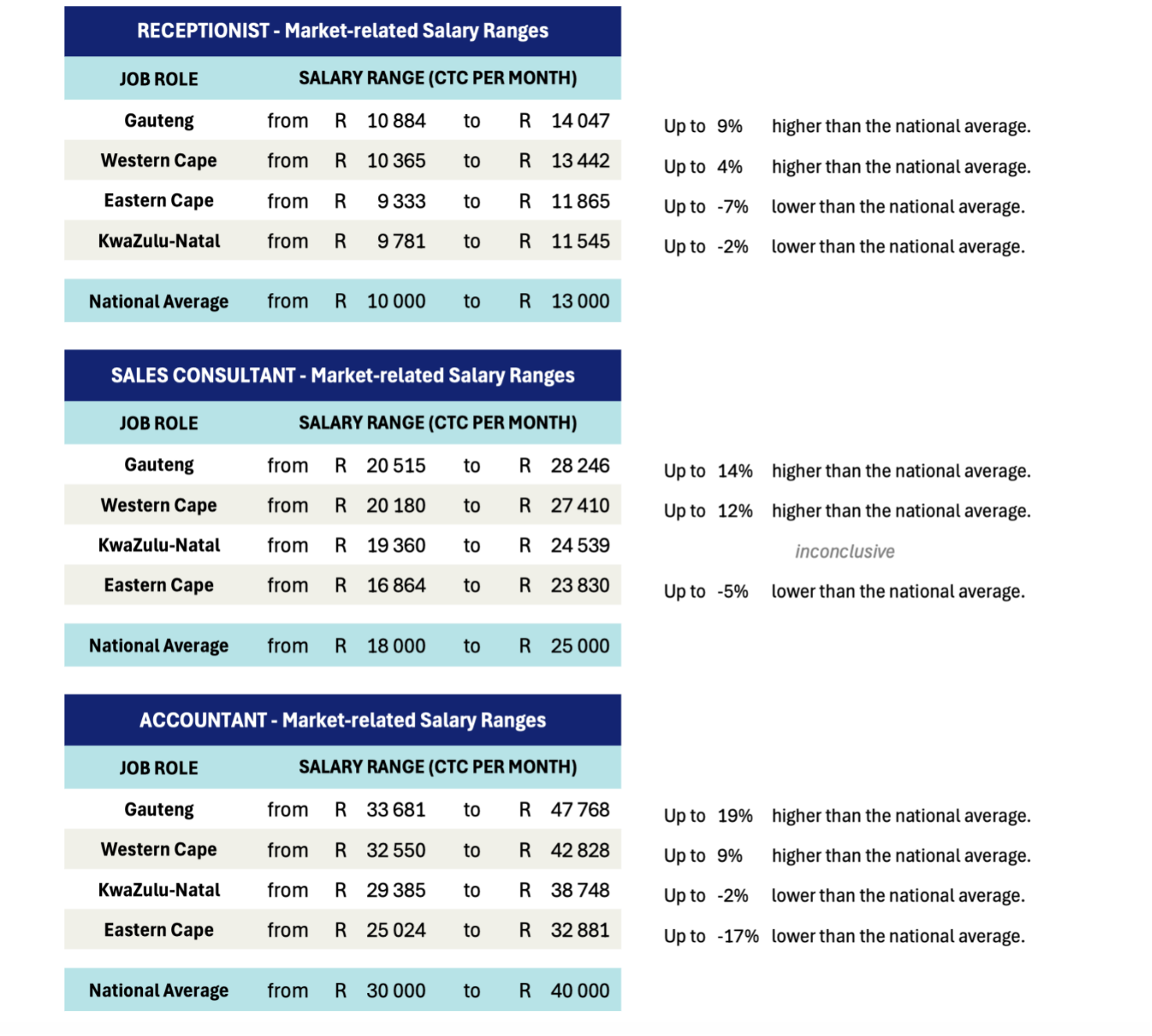
This creates an important market dynamic that estate agents should consider: buyers in high-income sectors such as technology may still semigrate successfully, while mid-level professionals often face salary compression outside of Gauteng. Remote work opportunities are also declining as hybrid work models return, and career growth and long-term earnings are increasingly influencing location decisions.
“Salary offers in provinces outside Gauteng and the Western Cape typically trail the national average due to lower labour demand,” Bates explains. “However, specialised professionals can still command above-market rates in sectors facing severe talent shortages.”
Lifestyle choice is no longer enough
Stephan Potgieter, CEO of BetterBond, agrees that semigration is entering a new phase, maturing significantly since 2020. “The initial pandemic-driven ‘lifestyle’ rush to the coast has been replaced by a more strategic, service-driven model. Buyers are no longer just looking for a view; they are looking for functional infrastructure, efficient service delivery, financial sustainability, educational opportunities, and, increasingly, career longevity.”
This means buyer conversations have become more sophisticated. Homebuyers and investors are increasingly influenced by municipal performance, long-term investment value, and economic opportunities.
Western Cape vs Gauteng
Economically, whilst the Western Cape remains a popular coastal destination and offers a potentially better lifestyle, the cost of living is significantly higher. According to PayProp’s latest Rental Index, average rents in the Western Cape are more than R2 400 a month, higher than in Gauteng. If moving and maintaining the same salary, a tenant’s disposable income will shrink, along with it the dreams of an improved lifestyle.
This has proven to be a costly misjudgement for those trying to advance their careers. As a result, many young professionals and skilled workers are driving the reverse semigration trend. “Professionals are returning to the province because of its stronger economic opportunities and career prospects,” says Potgieter, who adds that data from Wise Move reports a 40% year-on-year increase in relocations from Cape Town back to Gauteng during 2025.
Income levels reinforce Gauteng’s appeal. According to SARS 2025 statistics published by The Outlier, assessed taxpayers in Johannesburg earned an average income of R480 318 per annum in 2024, R109 000 more than their counterparts in Cape Town.
Younger buyers lead the way
Chante Venter, CEO of Wise Move, says that the surge in moves back to Gauteng is driven by specific age cohorts. “While Wise Move’s migration data is anonymised and does not directly assign age to specific migration corridors, our broader platform demographic data shows that the majority of users fall within the economically active 25-54 age bracket, with 25-34 year olds representing the single largest segment.”
This aligns with a broader demographic shift in the property market. According to Dr Andrew Golding, chief executive of the Pam Golding Property group, the national average age of home buyers declined to 40 years during January to April 2026, one year younger than the same period in 2025. With the median age of South Africans now just 29 years, the country’s demographic profile is creating powerful long-term demand for housing, particularly among first-time buyers.
When viewed alongside migration data, the strongest growth back into Gauteng appears to be driven by working-age professionals, younger families, and economically active urban households. “Western Cape to Gauteng relocations increased 58.6% year on year, with the strongest acceleration concentrated in compact and apartment-origin moves rather than large family relocations,” says Venter. “The destination pattern was also highly concentrated around Gauteng’s major economic and employment hubs, including Sandton, Johannesburg, Midrand, Pretoria, and Centurion.”
“The housing data adds another important layer to the story. Among households moving from the Western Cape to Gauteng in 2025, 37.78% moved into larger homes, while only 9.24% downsized, suggesting that many movers may be balancing career access with housing value and long-term affordability.”
Customer interactions frequently referenced career mobility, study opportunities, hybrid work arrangements, and broader affordability considerations. “While the dataset cannot directly prove motivations such as employer mandates or schooling costs, the overall pattern is highly consistent with economically active households reassessing the balance between lifestyle, opportunity, and long-term sustainability,” says Venter.
Return-to-office as a catalyst
Return-to-office mandates are adding further momentum to inland rental markets. “Reverse semigration is starting to create real momentum in inland rental markets,” says Michelle Dickens from PayProp South Africa. “As professionals return to the office, many are opting to rent before making longer-term property decisions, particularly in a market where affordability remains under pressure.”
According to Absa’s latest Homeowners Sentiment Index, confidence in inland property markets increased in Q4 2025, while coastal sentiment remained relatively flat, signalling a potential rebalancing after years of one-way traffic. Dickens also points to proximity to work, reduced commuting time, urban lifestyle living and easy access to amenities as factors driving the shift, all of which are difficult to find outside Cape Town or other spread-out Western Cape business centres.
“Agents in inland areas are likely to see increased demand from returning semigrants, particularly in well-located properties close to business districts,” says Dickens. “Agencies could capitalise on this trend by actively marketing to Western Cape residents and highlighting the value proposition of inland living. Understanding where tenants are moving, and why, and adapting rental strategies accordingly will be key to unlocking growth in the year ahead.”
Income factors
Wise Move does not collect verified income data, but the movement patterns in the 2025 dataset suggest a noticeable divide between middle-market migration behaviour and more premium lifestyle-driven movement. “The strongest return flows into Gauteng were concentrated in established but comparatively more accessible residential and economic nodes such as Ferndale, Lone Hill, Fourways, Faerie Glen, Queenswood, Brooklyn, and parts of Centurion and Pretoria,” explains Venter.
“These areas were classified as middle-market or affordability-sensitive not because they are inexpensive suburbs, but because they generally offer stronger value-for-space, more attainable family housing, and closer proximity to business hubs when compared with premium Western Cape lifestyle corridors.”
By contrast, many of the strongest Western Cape departure areas included Durbanville, Brackenfell, Burgundy Estate, Bellville, Milnerton, and Bloubergstrand, where rising property values, rental escalation, and broader cost-of-living pressures have become increasingly noticeable for working- and middle-income households.
“Gauteng to Western Cape was still the single largest interprovincial corridor in 2025 and continued growing year on year, reinforcing the province’s continued appeal for lifestyle-led and higher-income migration,” Venter adds.
Down- or upsizing
One of the more revealing findings is that households moving into Gauteng were often able to maintain or improve their housing position. More than a third of movers from the Western Cape to Gauteng transitioned to larger homes, while downsizing remained relatively limited. “This suggests that some middle-market households may increasingly be prioritising economic practicality, housing sustainability, and long-term value over purely lifestyle-led migration decisions,” Venter confirms.
“Taken together, the data points less toward a collapse in semigration and more toward a growing divergence in migration behaviour. The Western Cape continues to attract affluent and lifestyle-oriented households, while Gauteng’s strengthening pull appears increasingly linked to economic opportunity, affordability, and practical long-term positioning for middle-market households,” Venter concludes.